You can never accuse Charles Laughton of not having good gut instincts. Jonathan Reynolds, his multi-millionaire character in 1940’s It Started with Eve, distrusts the seemingly perfect Gloria Pennington from the start. Indeed, Pennington, enacted with innocent calculatedness by the almost forgotten Margaret Tallichet, is decidedly after his son’s hand in matrimony – or is that his fists full of money? Well, unsurprisingly to old school film lovers everywhere, it is definitely the latter. That Tallichet so capably plays her fake concern for Robert Cummings’ gullible Johnny is one of this cute venture’s prime joys, though. She provides the plot’s sweet-flecked oiliness while Deanna Durbin, as the true heroine, gives it a rambunctiously musical heart.
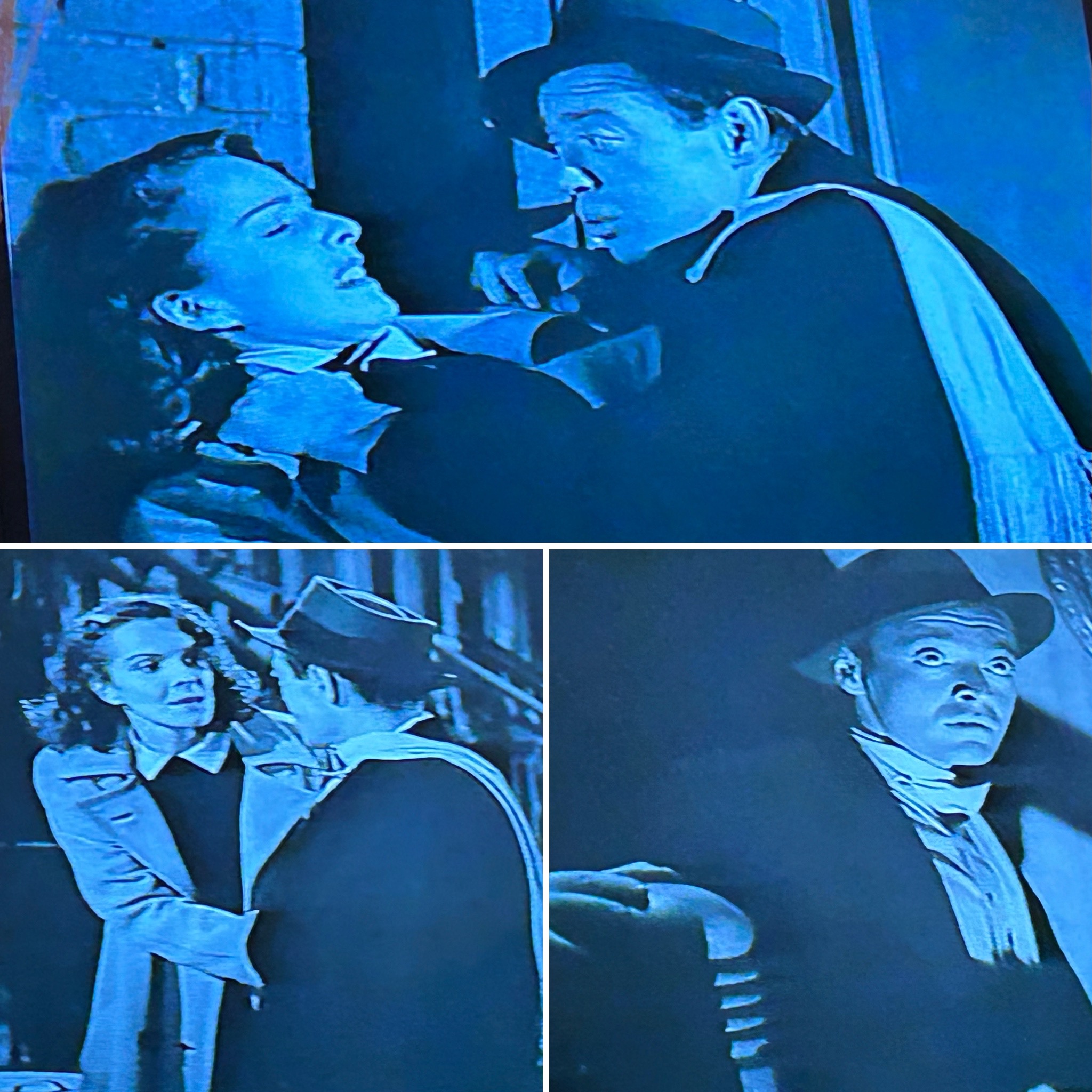
Indeed, this character provided this short-lived movie queen with a nice turnabout. In her other picture that year, the horror thriller The Stranger on the Third Floor, she found herself in the trembling protagonist’s shoes. Dreadfully antagonized by Peter Lorre’s devious titular character, this refined beauty earned her terror stripes and then some.
Despite these promising breakthroughs, though, family life seemed to be her primary focus. A marriage to acclaimed director William Wyler, resulted in four children. With her last screen appearances occurring in 1941, this devoted mother died in 1991 at the age of 77. She remains ever present, though, to those oft beguiled celluloid fans who stumble across her everlasting essence, eating buttered popcorn while streaming YouTube in the dark.
Until the next time, SWEET love and pink GRUE, Big Gay Horror Fan!
Creating an oft copied, iconic style of vocalizing, the singular Debora Iyall is the epitome of a New Wave queen. I remember Romeo Void’s Never, Say Never, one of the songs most famous for featuring her synonymous delivery, being played at a freshman orientation dance-off. It was my first week at college in a big city and somehow that oft heard tune made me feel both at home and like I was on the path to brand new adventures.
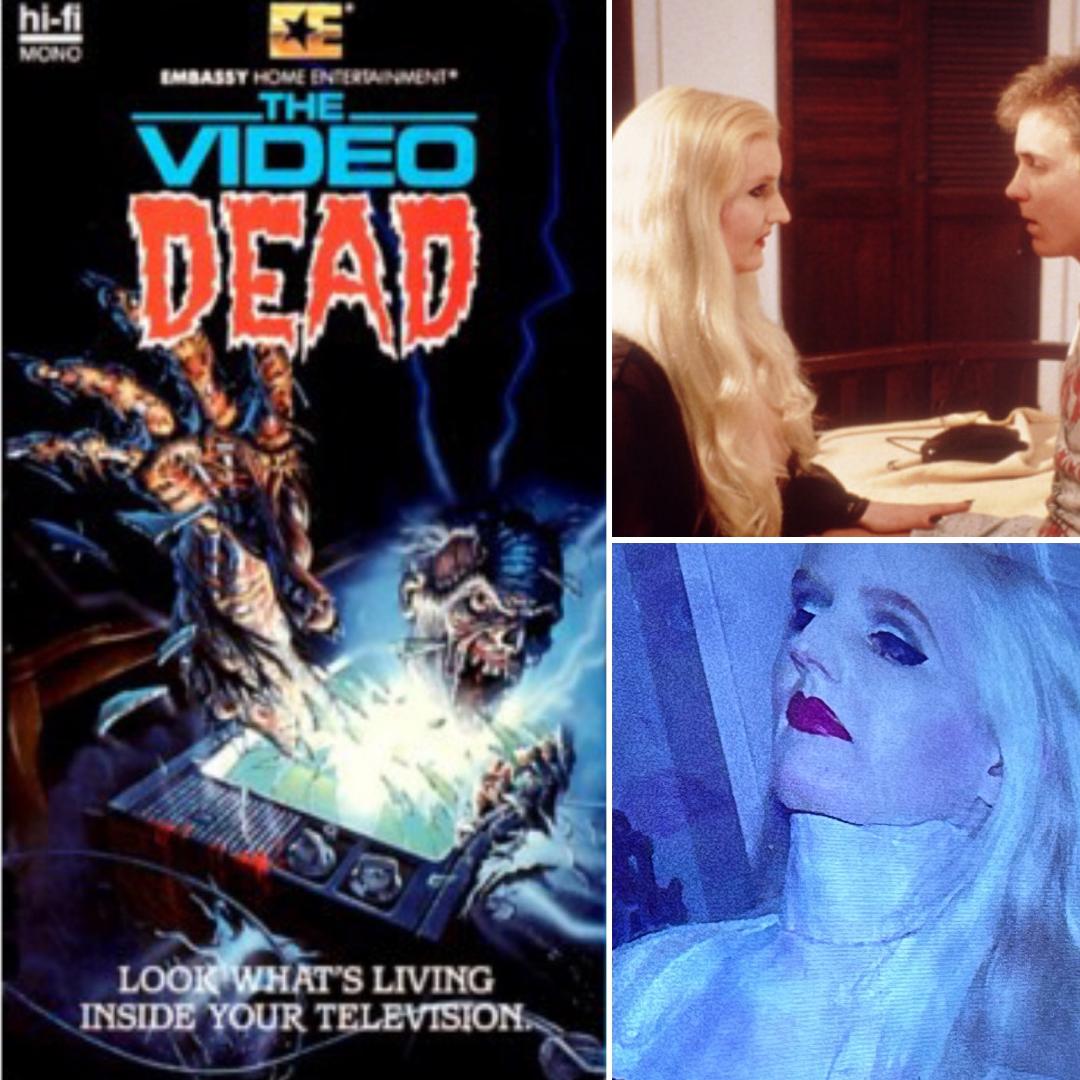
Of course, RV, the band that brought her into the public’s consciousness, is frequently featured on film soundtracks such as Dodgeball and The Wolf of Wall Street. But what many may not know is that Iyall, as a solo artist, has a cinematic pedigree of her very own. Her fun and perky number, Dizzy Tonite, is featured, pink bedroom style, in the low budget ’80s horror romp The Video Dead. That song is reminiscent of many of the songs on Strange Language, her debut solo album. The title song is one of my favorite tracks there.
Now living, happily, in New Mexico, this unforgettable artist is, thankfully, still creating music and conquering the world in her individualistic way. Hopefully, as she does so, she carries all the heartfelt blessings sent to her by the many quirky teens, much like my long ago self, whose lives she, unknowingly, changed for the better.
Until the next time, SWEET love and pink GRUE, Big Gay Horror Fan!
On a daily basis, I can fall down endless media based rabbit holes. One article or show can send me on an all consuming spiral, but thankfully, the landing is usually sweet. Sometimes, it can even make me quite contemplative.
A cursory examination of The Video Dead, an ’80s horror cheese fest, this past Sunday led me to reappreciate the stunning Jennifer Miro, a pioneer artist in the LA punk scene, who appears, briefly yet magnificently, in that film. The porcelain skinned Miro was the frontwoman for the many incarnations of The Nuns, a goth-punk outfit with notable achievements and a large fan base, who never quite crossed over into the mainstream.
But Miro, who also doubled as a successful fetish model, probably never would have accepted the stereotypical molds that the major labels would have wanted her to exploit. She truly seemed at home in the world of indie exploitation, also appearing in projects like Nightmare in Blood, Dr. Caligari and Jungle Assault, and her live performances, particularly in her band’s final form, were reportedly highly sexualized affairs.
Even in her death, she navigated a different course. Battling liver and breast cancer for years, she kept her diagnosis a private thing and rejected traditional therapy methods. Relying on the assistance of a kind next door neighbor, Miro faded away, at the age of 54, in December 2011. According to her obituary notices, it would be a month or so before her former colleagues and friends were even aware that she was gone. Thus, those final years seemed to be an exercise in independence – a closing performance for an audience of one.
Hence, my mindful state. As a single gay man in my fifties, dying while walking a solitary path is one of my biggest fears. But, perhaps, Miro found a grace in distancing herself and dealing with her illness without the emotional distractions of others. There might even be a sort of purity in that…a grace there that I can latch onto as I navigate my remaining years, presumably alone.
Until the next time, SWEET love and pink GRUE, Big Gay Horror Fan!
Days later, after I stop by Lou’s to chug a root beer & grab some licorice at the mid-point of a Saturday afternoon jog, he tells me that he told off his sister Luann earlier in the week. Both Lou’s sisters are nuns and the three of them seemingly share some weird sort of ecumenical magic. “I don’t think I told you she was here last Friday.”
“No.”
“Well, I don’t know what the hell she left behind, but I finally had to call her on Sunday and tell her to cut it out! I mean, my phone’s whizzed and popped for awhile after one of her visits. But that? The bumping and scratching & weirdness?”
“I know.”
” Especially after that disappointing Eastwood flick!! Not a bare chest in sight! So, I couldn’t take it! I called her and screamed BITCH! She just laughed and hung up and… minutes later, it finally stopped.”
Catching his breath, the switch, as it so often does, clicks in him and he now eyes me, flirtatiously. “& to think, I thought you were making things up,” he fake-pouts, his voice oozing with Baby Jane cuteness, “just to get a little comfort from me!” He reaches out his arms, like a clumsy Toys R Us baby doll in need of perpetual attention, and I, reluctantly, let him hug me, damply, for a bit and then, after faking a coughing fit, I move to the kitchen table and sit.
Indeed, when Lou and Sherry had first returned that evening they had, dubiously, listened to my ghostly tale. The boys, who I had (somewhat) properly sent to bed, began calling for her, almost immediately.
“They were really scared” She grunts, noncommittedly. “They might try to come down if you don’t go up!”
Indeed, their whimpers of “Mom, mom,” sonically, seem to move ever closer as speak. “You stay right there! & In that bedroom – not the hallway!” she commandingly screams up to them as she shakes her head at me and, disapproving, climbs the stairs to the guest room where they are nervously pacing.
Earlier, we three, unsurprisingly, had found nothing upon exploring. Post incident, both Lou’s bedroom and the room that the boys were set up in were minus any deities – menacingly corporal or otherwise. Despite that seemingly calming discovery, their nervous energy squiggled about in uncontrollable bursts throughout the rest of the evening. I had hoped the continued lack of spiritual congress would eventually put them at ease. But as their prescribed bedtime rolled ever nearer, they grew increasingly nervous, begging to stay downstairs with me.
Naturally, I was desperate to avoid any kind of maternal disapproval. Sherry did not strike me as someone to mess with. So, I ordered them back up the stairs when their bedtime arrived. My caveat being that I would go with them as a form of mild, foolhardy protection. So, I sat by them for an hour, chatting as the lay, still too mortified to sleep. At the sound of shooting gravel in the rectory parking lot, they shot up, immediately, whipping off lightly draped blankets. But before their feet could hit the ground, I corralled them into remaining still for the moment. “Do you want to be the one who explains to your mom why you’re not in bed at 11 pm?” They both shake their heads. “Smart. Stay & I’ll send her up right away.”
Now Sherry emerges from the upper level, not a child peeping behind her, just as my parents, merrily, arrive. The five of them settle in the kitchen while I take coverage in the living room. My mom and dad seem less than convinced of our paranormal adventure, as well, and I sink into the recliner in the furthest corner, wanting to be at a far remove from the disbelieving adults. Time passes and I am just beginning to contemplate dozing off. My mom and dad tend to settle in for these gatherings and hours will pass by before the thought of leaving begins to even tickle at their consciousnesses. Keeping with the established flow of the evening, though, there have been consistent whispers on the floorboards and minor moans of wind against the windowpanes since this particular stop-by has begun. But the mature element has written them off as mere weather induced tragedies. Thus, I have not uttered a peep of awareness. But suddenly it seems as if these minor aural presences amplify – the creaks feel deeper, as if they are rocking the heart of this doggedly noble structure from within it’s oaky marrow. The conversation in the other room stops for a moment. I rouse from my slumber-aimed stupor…and listen to them listen. The chatter eventually begins again…but throughout the rest of this prolonged encounter, there are significant pauses in the flow of their words. The noises eventually, as if mocking them, begin to take on the shape of speech. They have the feeling of mini-monologues about them, as if some former inhabitants and their long ago guests, are trying to communicate their past stories through the shifting bumps and bark-stained titters. What secrets are they sharing? Lou’s voice rises even higher now, a quivering tone of strained combativeness entering his exchanges. He is trying to outgun the unknown’s invisible, sensory alarm.
Finally, Sherry rises, mentioning a need for sleep if she wants to be at early mass in the morning. The group ascends into the room, drawing nearer, almost as one, embarrassed smiles creasing their features. They believe us now, I can tell. And I, who will spend decades doubting myself even in the most affirmative circumstances, am strangely confident here. I never second guessed for a moment what we’d seen. It felt as real, as part of this atmosphere as all the unwanted gestures, the lingering caresses of a man possessed by some other affliction than charitable duty and public service.
Note: (My first horror movie buddy was a priest named Lou Hendricks. Several years ago, Hendricks was named by the Western New York Catholic diocese as one of their most unrepentant predators in the ’70s and ’80s. Thus, I grew up watching monster movies with a monster – a man who was like an uncle to our family. Over the next few months, I will be sharing some of my stories from that period of time.)
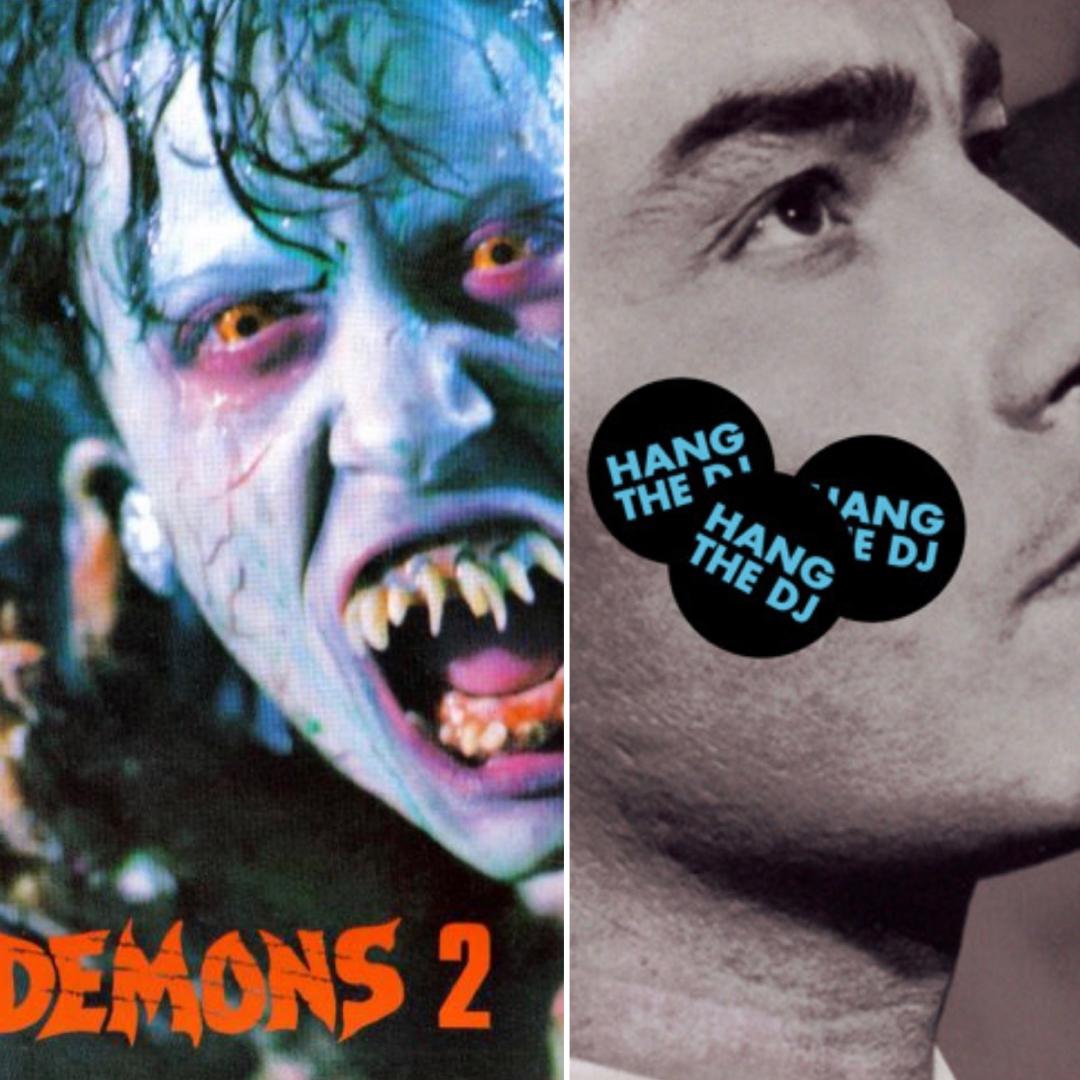
Despite his reputation as the ultimate vegan curmudgeon, Morrissey must have developed a sense of fun somewhere along the line. This thought is most clearly laid out by the inclusion of Panic, a kinetic track from the dour troubadour’s classic The Smiths days, in the ecstatically rambunctious horror romp Demons 2.
Simon Boswell, the film’s composer and music coordinator, has recounted in interviews how his request to the illusive singer was framed around the film’s mild condemnation of media and consumerism. Still, as the project’s title so steadfastly reveals its true nature, one can certainly hope that this very British gentlemen is just as turned on by humor-stained gore as the rest of us.
Indeed, Boswell’s more gothic instincts gives the soundtrack, as a whole, a dark wave of jubilance. But none of the other cuts – including fun tracks by everyone from The Cult to Peter Murphy – quite give Sally’s birthday party, where the music here takes zombie-blooded root, the shot of adrenaline that is contained within this early take on social blandness from the one and only Master of Mope.
Until the next time, SWEET love and pink GRUE, Big Gay Horror Fan!
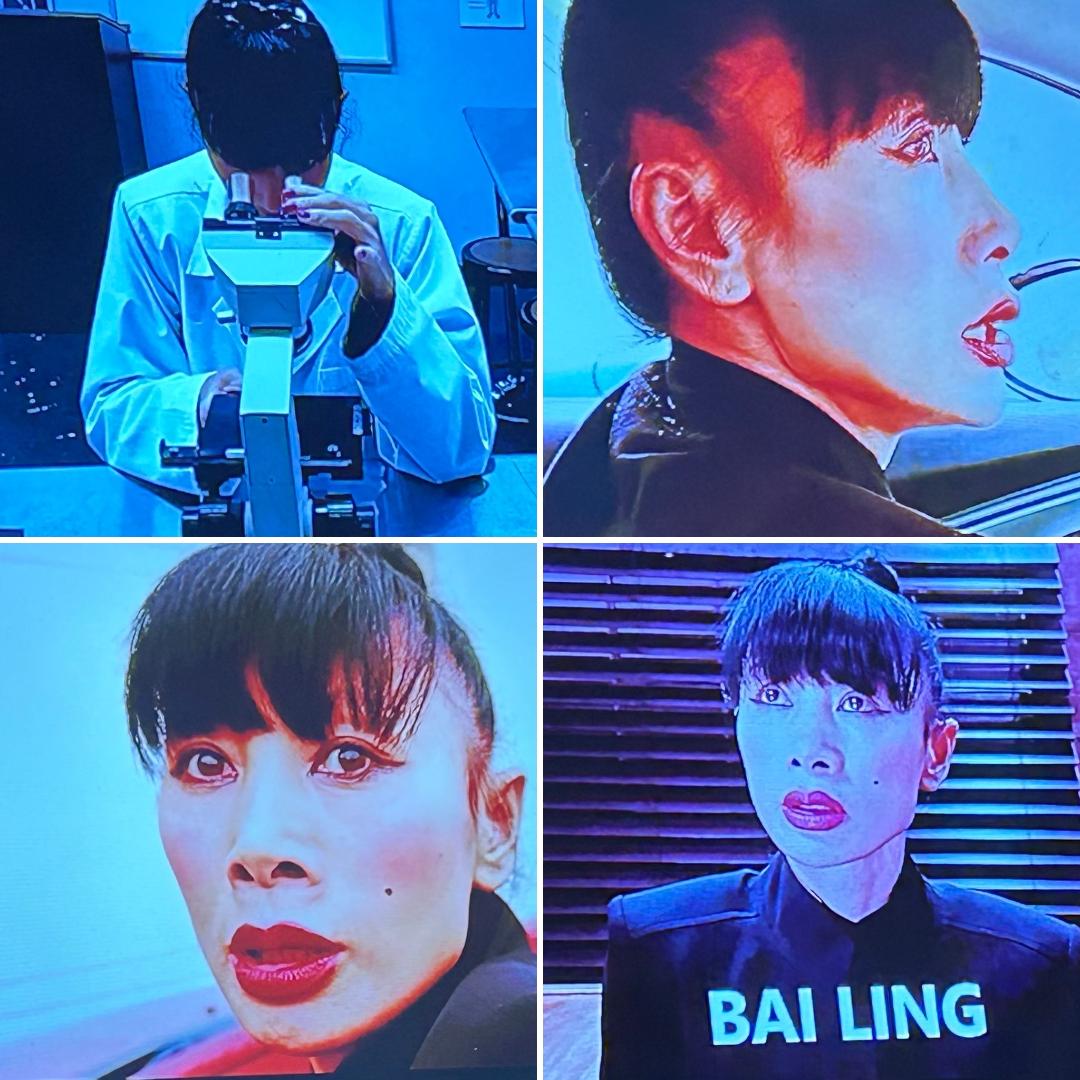
(A new column dedicated to the projects of the truly singular Bai Ling)
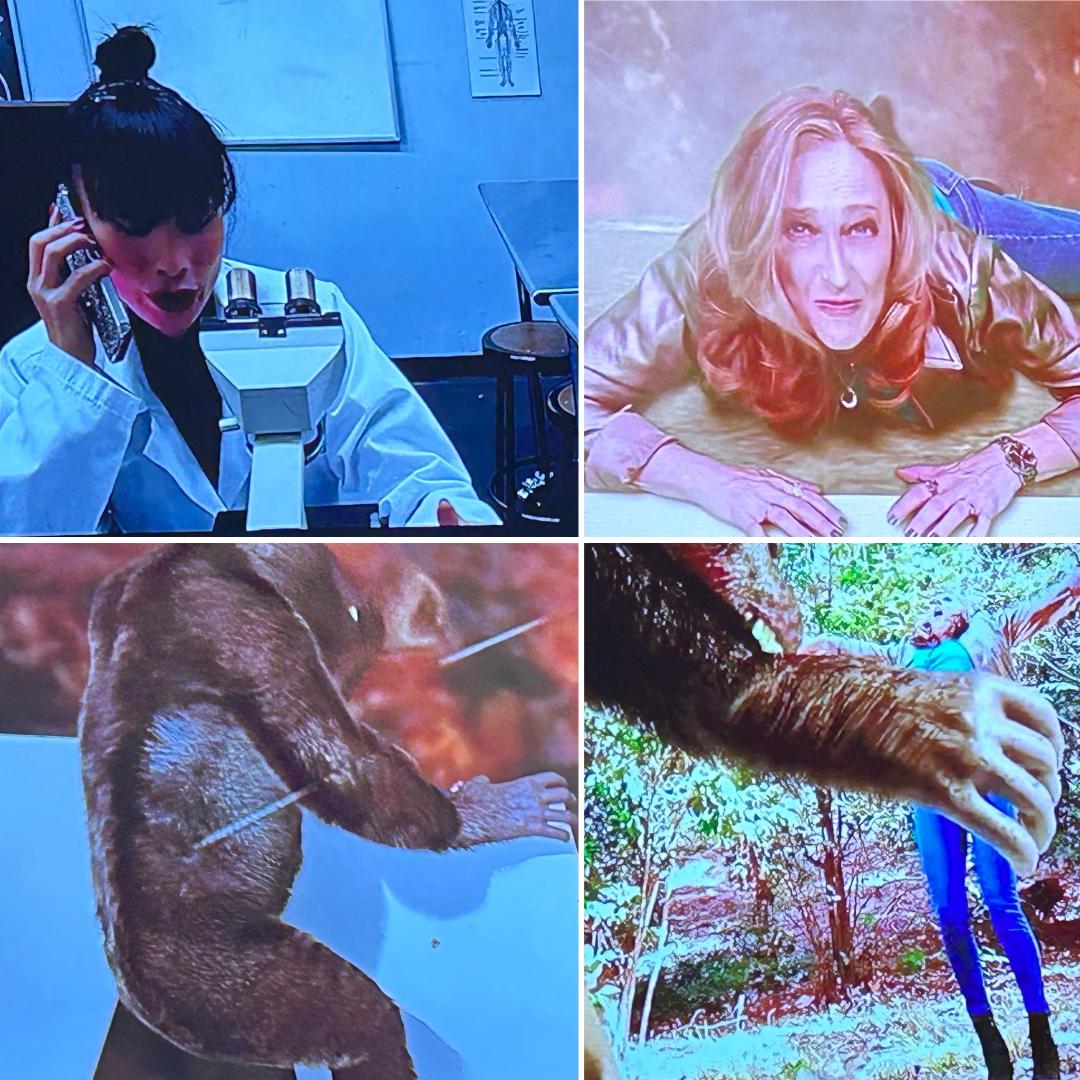
Much like the multi-layered Irwin Allen disaster flicks, Mega Ape‘s writer and director Dustin Ferguson introduces us to multiple characters and plot points in the quick 72-minute running time of this furry feature. (Amusingly, 10 minutes of that is actually devoted to the pre and post action credits – so you’ve got just a little over a television episode’s worth of stuff here.) To wit, briefly beheld, there are a group of animal activists, a hysterically gesticulating mad scientist (Ling), a woman scorned, a rambling duo of conspiracy theorists and multiple hikers in danger.
Following the usual path of these things, our titular beast is unwittingly released by some overzealous puppy loving civil servants. Soon, ever growing and growing ever angrier, it is on the warpath. Death and mayhem, naturally, ensue. Interestingly, it seems that the power of this creature is also linked to the subconscious and soon the whole world may be one Empire State Building away from Kong-ing out.
As a creator, Ferguson is obviously having a blast here. Working with a visibly miniscule budget, technology, it seems, has finally allowed him to make one of his dream projects – an ambitious, leveled monster flick. Of course, the cheese and wacky humor practically ooze out of this celluloid sandwich – with our favored goddess being a huge part of that.
While it appears as if Ling’s scenes were all filmed in one spastic afternoon, her appearances are, thankfully, scattered out amongst the project’s complete length. As it stands, as Dr. Li, our heroine generally works only one emotion – mania. But I, for one, wouldn’t have it any other way. Her shining exuberance is the flowery bow on an already very colorful present.
Until the next time, SWEET love and pink GRUE, Big Gay Horror Fan!
Let’s get this out of the way, right off the bat – it is super creepy watching legendary producer William Castle, always a naturally congenial presence onscreen, play Jack P. Harper, a sleazy Golden Age movie mogul in the 1974 television film The Sex Symbol. A fictionalized, ridiculously exploitive look at the life and times of Marilyn Monroe, this greasy bio-pic stars silvery Connie Stevens as the luscious, deeply troubled Kelly Williams. Granted, there are several evocatively disturbing components here. For instance, the screenwriters seem obsessed with the rumor that Monroe veered towards the asexual side in the bedroom, remitting countless scenes of a barely clothed Stevens bemoaning her lack of interest in the carnal as her partners smoke, hazily, in rumpled bedrooms. But Castle’s supporting role, as the executive who helps create Williams’ translucent aura, hits the hardest when he rapes the titular character in a fur-stained boardroom. We’re a long way from the innocent charms of the original 13 Ghosts here, folks!
Almost as a counterbalancing routine, we get a bit of Sapphic intrigue occurring throughout this perfumed reimagining, as well. To that matter, the exquisite Madlyn Rhue is on hand as Kelly’s trusted secretary, Joy Hudson. Hudson, an obvious stand-in for Monroe’s lesbian acting coach Natasha Lytess, spends her screen time glowering at anyone who dares disturb Williams’ autonomy on the celluloid baby-voiced diva market. Of course, whether she is drying her charge’s never ending tears or, lasciviously, giving her an oily rubdown, Rhue excels with a hardened demeanor and sultry essence of control.
Nicely, even though the premise, a flashback laden journey as Williams teeters on the brink of alcoholic immobilization, is an often exhausting one, Stevens is surprisingly good in the project, too. She offers up a raw and truthfully connected pathway to her character, showing both heart and watery persistence in equal measures.
To balance out Steven’s pert femininity, perennial bad guy and 70s horror icon William Smith makes the scene as (the Joe DiMaggio-esque) Butch. Although, the most wickedly inspired casting here might belong to the laidback Don Murray, as a randy politician on the rise, and the overbearingly camp Shelley Winters, essaying a outwardly flowery yet intrinsically vengeful gossip columnist. As many celluloid fans are aware, Murray co-starred with Monroe in Bus Stop while Winters was her roommate, once upon a glistening Hollywood memory, when both women were young starlets.
Horror Hall of Fame:
While Stevens has her share of cobweb strewn credits – Two on a Guillotine (a personal favorite, btw) & Tales from the Darkside, for instance, it is Winters who is the true horror maven here. Her credits include Who Slew Auntie Roo?, What’s the Matter with Helen?, Tentacles, Witchfire, The Tenant and The Visitor. Check ’em out!
Until the next time, SWEET love and pink GRUE, Big Gay Horror Fan!
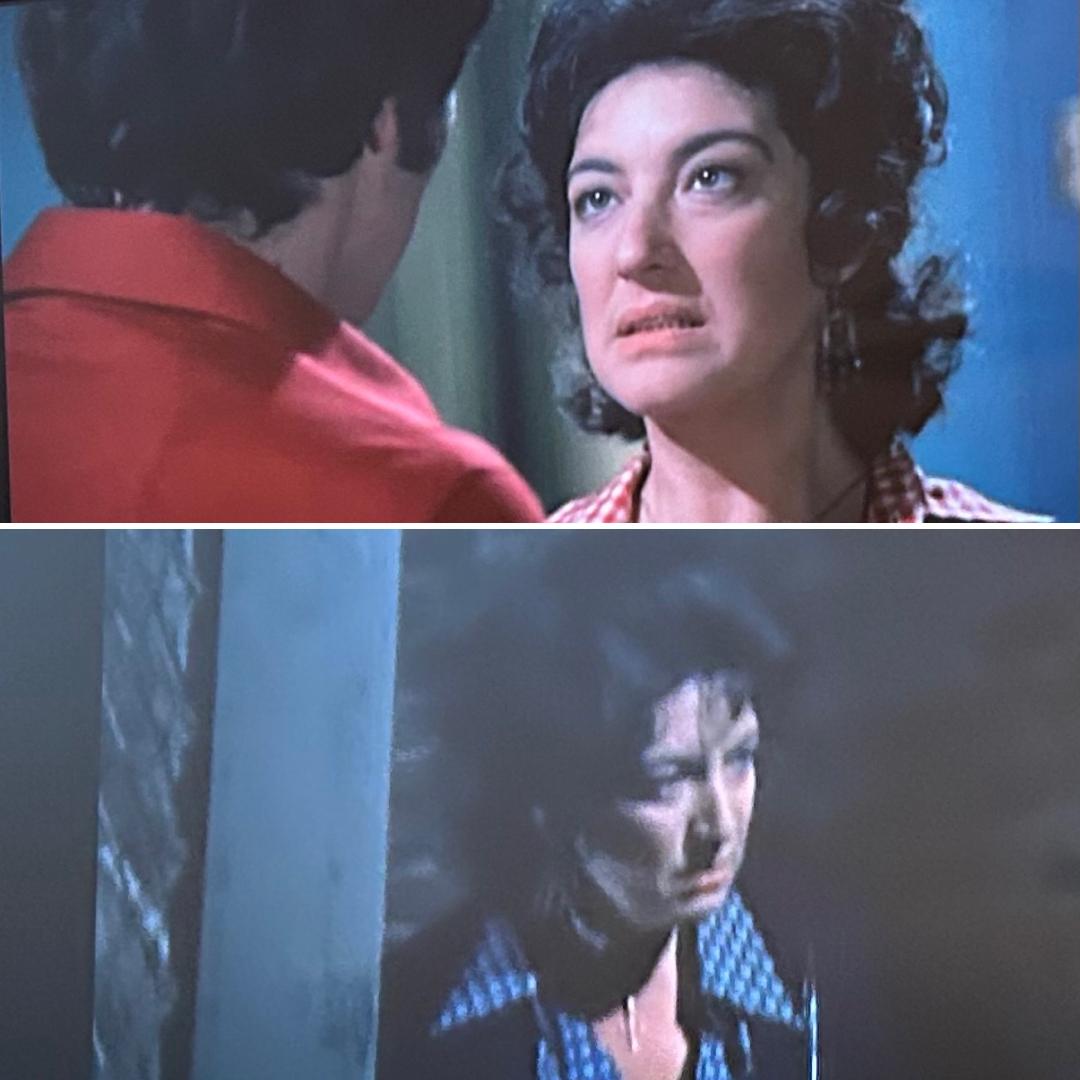
Often playing smaller and supporting roles, the divine Rhoda Gemignani floated throughout the background scenes of many a cinema buff’s childhood. Terror tykes might know her best, though, for her portrayal of the Real Estate Agent in the original Ghostbusters film.
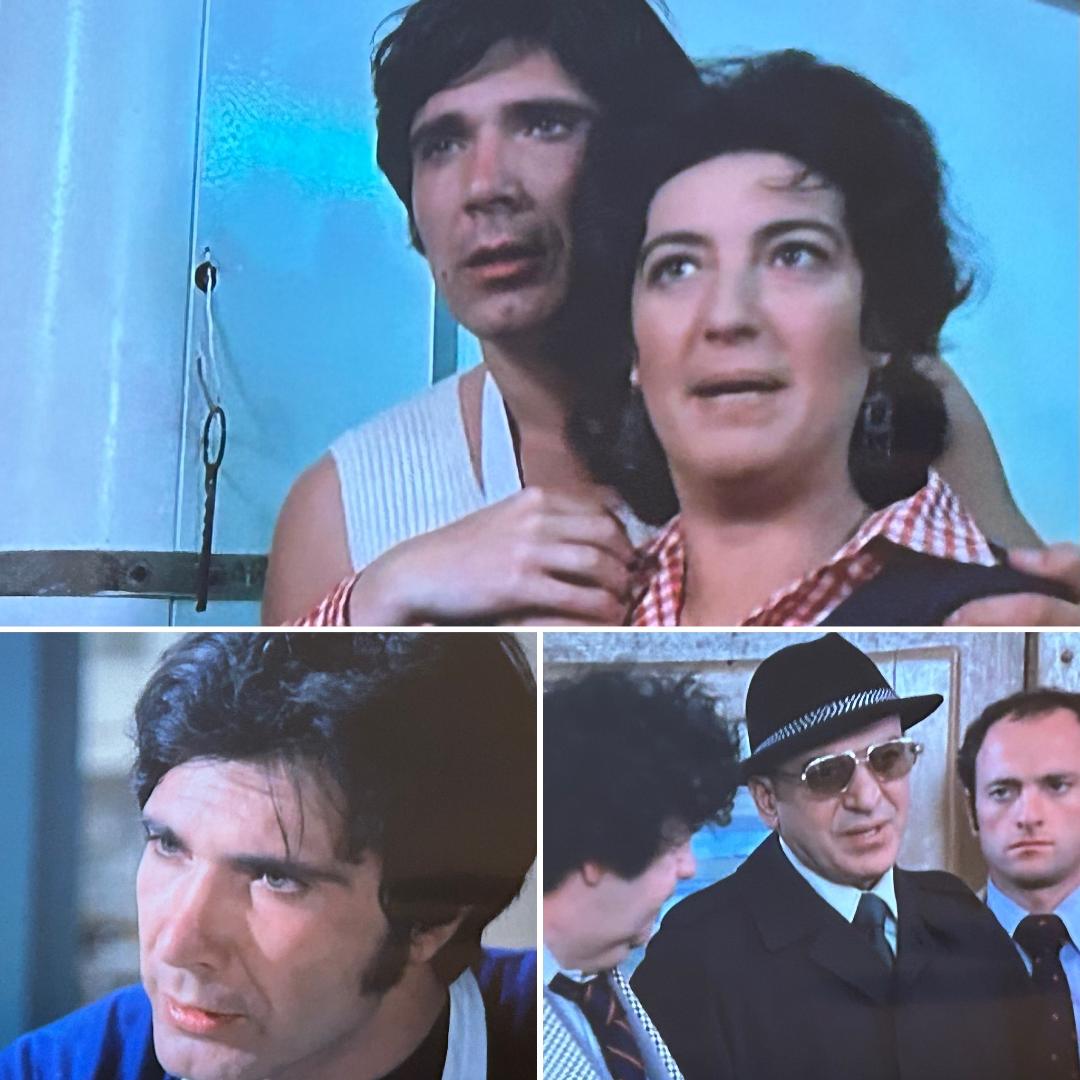
Nicely, in the mid-70s, Gemignani was given the chance to play a character of dramatically gothic proportions on The Forgotten Room, an episode of the classic detective show Kojak. There, as a lusty widow named Katrina Patropoulos, she embraced all of the desperate, almost Southern characteristics of the role. Obviously inspired by Anna Magnani’s Serafina from Tennessee Williams’ The Rose Tattoo, Gemignani shines like a diva personified throughout the various mechanics of the straightforward plotline. Short-handedly here, the long ignored Patropoulos falls into a passionate affair with a handsome stranger (George Pan Andreas) – one who has an unfortunate propensity for killing prostitutes.
As many of Williams’ female characters seem to be the prototype for the troubled divas of such films as Whatever Happened to Baby Jane? & their ilk, career-wise, it would have been nice to see Gemingnani go full throttle in a celluloid escapade of that caliber. As that was not to be, her work in this primetime caper will have to be the dreamy stand-in for all that could have, wonderfully, been.
Until the next, SWEET love and pink GRUE, Big Gay Horror Fan!
I’m forever crawling on my hands and knees in thrift store aisles, hoping to uncover hidden multimedia gems. This past Saturday, I was biking to a film event and stopped at Green Resale, a huge, four roomed oasis of the not-so-badly used. There I found a cheap set of DVDs from (the almost forgotten) Brentwood Home Media, entitled Toga Party. Even though a couple of the discs were missing, there were still many treasures to be found inside.
The era of film where my nostalgia hits the hardest is that late ’80s, early ‘90s late night cable era. Sexy shows reigned on cable stations then and the word Bikini was an oft used/featured thing. (For example: Bikini Drive-In, Bikini Med School, Bikini House Calls, Bikini Car Wash, Bikini Summer, Bikini Summer 2.) Nicely, the Toga Party collection included a number of episodes of a flash n dash show from that period of time called Divorce Law.
There, the prime defense team, played by such titans of this fare as Jay Richardson and Monique Parent, work together to throw the book at very naked varieties of nefarious conjugal schemers. My favorite 30-minute sequence involves my good buddy (and late night cable stalwart) Deborah Dutch. There, as a French charmer named Brigitte Dubois, she convinces a handsome attorney (Christian Noble) to marry her for her Green Card. When he discovers her lesbian lover hovering nearby and tries to divorce her, she drops a pregnancy bomb on him. Of course, her plans are waylaid when a stolen sample of her pee reveals the truth. Barren as the desert and momentarily penniless, she returns to Paris and the sexy charms of her female paramour.
Dutch is obviously having a giddy time being so mischievous here. The role is definitely a change of pace from her more charmingly comic parts in such cult fare as Hard to Die, Attack of the 60 Foot Centerfolds and 976-Evil II, making it recommended viewing for her devotees and for anyone who loves the material popularized on USA’s Up All Night all those magically star struck years ago.
Until the next time, SWEET love and pink GRUE, Big Gay Horror Fan!
I feel like my life has been an uninterrupted study of film facts and yet…I am constantly surprised, as I sit in various nostalgia screenings, to discover performers I have never even heard a whisper about previously. I am also continually uncovering facets of careers that I thought I had known, backwards and forwards.
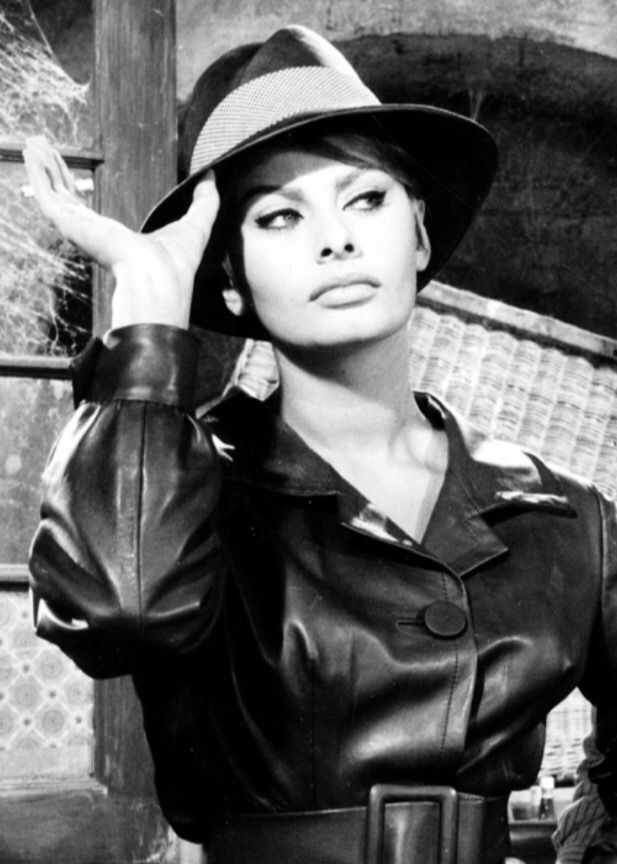
As one of the great European movie divas of the ‘50s & ‘60s, Sophia Loren, dutifully, committed some kittenish vocalizing to a number of vinyl recordings. Evidence of these minimal offerings have shown up on such compilations as the Pin-Up Girls series and Rhino Records’ cult-worthy Va-Va-Voom in the mid-80s.
A recent dusty knee LP bargain hunt, at Reckless Records in Chicago, unveiled a previously unknown treasure, though. To promote The Millionairess, their 1960 feature film, Loren and Peter Sellers recorded a cute, off the cuff album together. Among the cutesy duets and novelty numbers, Loren actually made like a professional cabaret chanteuse and committed a couple real live numbers to wax. One of these was Rodgers and Hart’s To Keep My Love Alive, perhaps the most literary murderous ballad ever committed to theatrical life via the use of pen and paper.*
Loren’s simple yet funny reading of the song actually brings out the humorous plot points with a precision that more classical takes on the material have sometimes failed to uncover.
Of course upon further reflection, the fact that Loren, whose career has included literary achievements along with a string of big budget action films in the ‘70s, is so eclectically motivated should surprise absolutely no one.
*The song was written as a character study of the villainous Morgan Le Fay for A Connecticut Yankee, a Broadway musical.
Until the next time, SWEET love and pink GRUE, Big Gay Horror Fan!











 Big Gay Horror Fan