review

All posts tagged review

Music to Make Horror Movies By: Billy Idol

Published June 15, 2025 by biggayhorrorfan

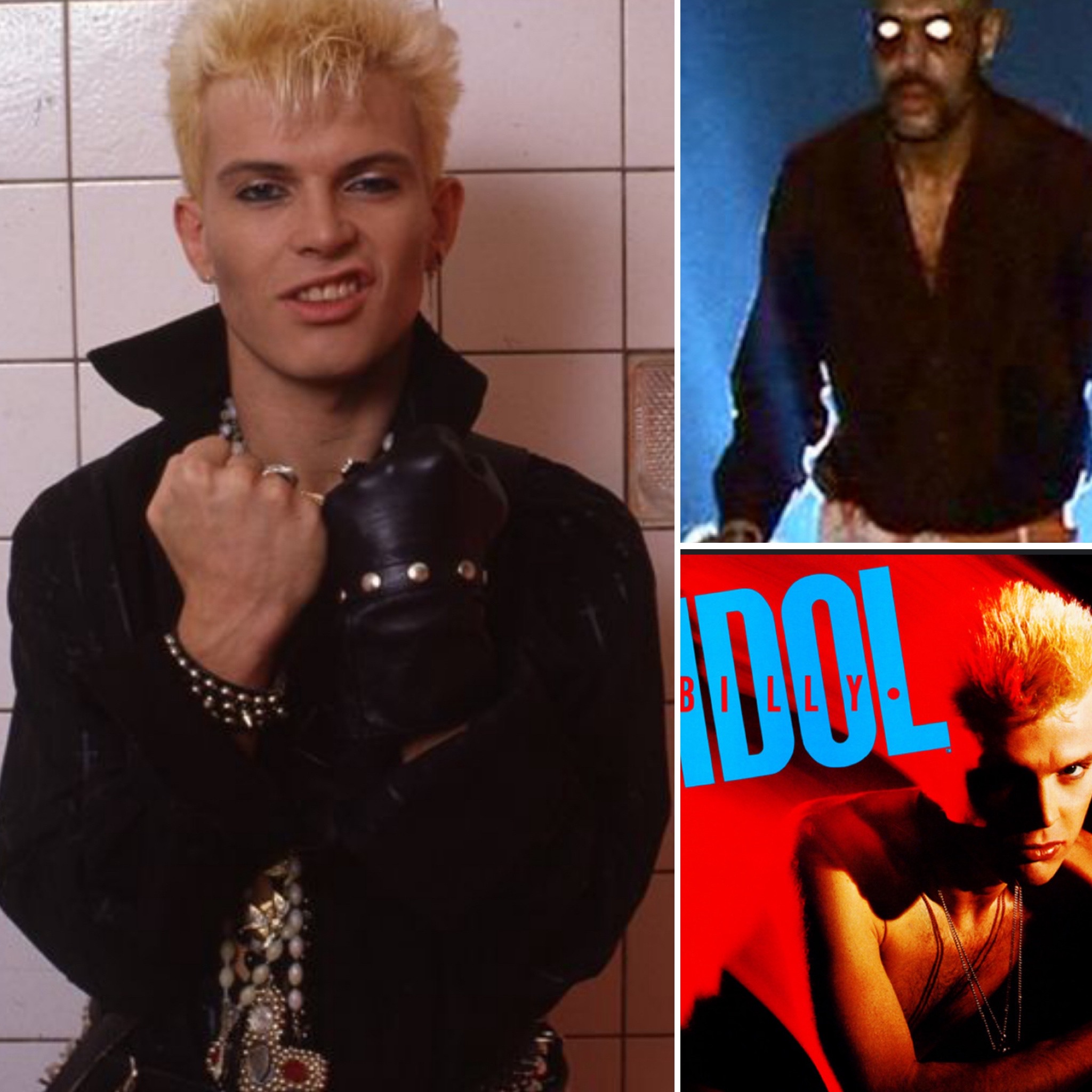
At 17, I really knew nothing about the gay community. I was growing up in a small farming town, surrounded by shit kicking, flannel shirt wearing earth outlaws. But somehow, I instinctively knew that the leather jockstrap sported by Billy Idol on the January ’85 cover of Rolling Stone was part and parcel of the queer male experience. I already had multiple crushes on all the smooth soap opera hunks from my favorite shows, but never before had I been quite so unabashedly titillated. 

I probably would have been even more turned on if I had been aware of Idol’s connections to the horror community in that era. 

As a fan of Texas Chainsaw Massacre and Poltergeist, he himself hired director Tobe Hooper to helm the post-apocalyptic video for Dancing with Myself. A couple years later, his music swirled out from celluloid bound speakers, accentuating the splattery action of Lamberto Bava’s Demons. Perhaps even more importantly, as the decades have flown by, many music critics have reassessed Rebel Yell, his second album, finding it to be one of the significant Gothic New Wave records of that era. This is unsurprising if you consider that the haunting Eyes Without A Face, one of that LP’s focal points, was influenced by the influential French horror movie of the same name.

Catering to that trend, in the years since, songs like Rebel Yell and White Wedding have worked their way onto the soundtracks of such projects as Bride of Chucky, Scream Queens, American Horror Story and The Chilling Adventures of Sabrina. The inclusion of that latter song in 2025’s Fear Street: Prom Night, which became the Number One film on Netflix within a day of its release, has surely introduced him to a bevy of younger terror loving fans, as well.

Who knows? Maybe some quivering twink in some remote village will even discover that long ago magazine image for the first time and find himself as transformed as I was all those years ago.

What the hell! For his sake….

Until the next time, SWEET love and pink GRUE, Big Gay Horror Fan!

http://www.facebook.com/biggayhorrorfan

The Backside of Horror: The Killing Kind

Published May 18, 2025 by biggayhorrorfan

Outside of Joe Dallesandro’s work with Paul Morrissey in Andy Warhol’s Frankenstein and The Blood of Dracula, the exploitation films of the ’70s were not usually an advertisement for the male physique. 

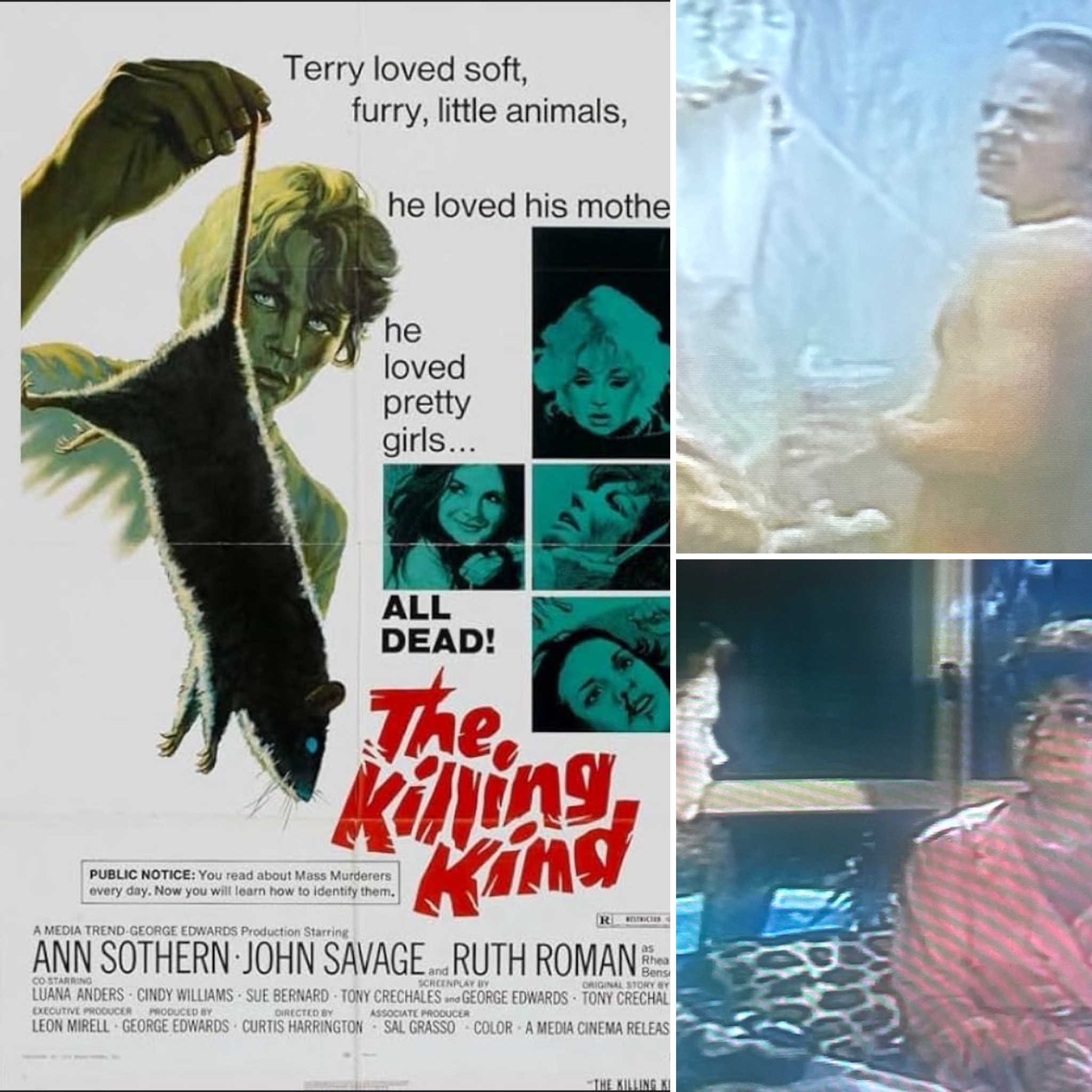
Gay director Curtis Harrington, though, definitely cast a loving camera eye onto the young, very fit John Savage in 1973’s The Killing Kind. Often shirtless and/or running around in tiny swimming trunks, Savage’s unstable Terry Lambert is lingeringly obsessed over by his mother (Ann Sothern), a female roommate (Cindy Williams), an uptight neighbor (Luana Anders) and his former lawyer (Ruth Roman).

Often shrinking from their fevered gaze, Lambert’s hesitancy to their affections is truly understood in one mid-act scene. There, Sothern’s Thelma incestuously sneaks into the bathroom while he is showering and, giggling with coy abandon, takes many a steamy photo of him.

Harrington’s lens, meanwhile, is almost as lovingly obsessed with Savage’s rare masculine beauty as the plotline participants. This makes this offering the rare proto-slasher with plenty of sensuously photographed scenes of skin of the red blooded and increasingly bare variety – all reaching a head (or buttock as the case may be) with that daring wet, bathing shot.

Until the next time – SWEET love and pink GRUE, Big Gay Horror Fan!
http://www.facebook.com/biggayhorrorfan

Ann Sothern: The Triumphant Kind

Published May 5, 2025 by biggayhorrorfan

Gay director Curtis Harrington was the George Cukor of the horror set. With filmic grace, he guided such pedigree blessed superstars as Gloria Swanson, Simone Signoret, Gale Sondergaard, Piper Laurie and Joan Blondell to blood curdling glory in such projects as Games, The Killer Bees, Ruby and The Dead Don’t Die.

Of course, his greatest achievement among the diva set just might be 1971’s What’s The Matter with Helen? That cult favorite, featuring the dueling frames of pert Hollywood sweetheart Debbie Reynolds and robustly complicated Academy Award winning Shelley Winters, did not, initially, set the box office on fire. But critically praised as one of the best post-Whatever Happened to Baby Jane? imitations, it has become a favorite among discerning terror lovers in the decades since.

But running a close second, in my opinion, to that lauded project is 1973’s gloriously sleazy The Killing Kind. This celluloid smudge features not only Ann Sothern, at her matriarchally pouty best, but the whiskey soaked Ruth Roman and catlike character actress Marjorie Eaton (The Time of Their Lives, The Snake Pit, Zombies of Mora Tau).

Revolving around Sothern’s blowsy Thelma and her often shirtless, sexual deviant son Terry (John Savage), the movie definitely fixes an unwavering gaze on Savage. Just released from prison due to participation in a gang rape, Terry is oddly juvenilized by Thelma, who forces chocolate milk and lipstick stained kisses upon him in abundant measure. Thelma is not alone in this kind of overindulgence. A spinster librarian (Luana Anders), a wanna-be starlet (Cindy Williams) and even Terry’s former lawyer (Roman) & an aging tenant (Eaton) of Thelma’s, all drip around him with moist concern and occasionally aggressive interest. 

In particular, Louise, Anders’ character, fantasizes about him sadistically violating her. Meanwhile, Rhea, played by Roman, seems more distressed over losing Terry’s case due to sexual affection for him than any career-style woes.

The plus side of these and other incidents is this is the rare exploitation outing that concentrates on male beauty, happily embroidered by a juicily femme cast. The psychology here, though, may leave something to be desired. The screenplay seems to suggest that the reason the deeply violent Terry erupts on a journey of uncontrollable revenge is all due to the fawning, overly needy women in his life and not extreme mental imbalance or some other layered factor. 

Still, as the lead-in paragraph indicates, Harrington works wonders with the female cast. Roman crams a variety of emotional flavors into her one scene while Anders brings a successfully bitter, almost acidic, texture to her characterization. 

Magnifying them, Sothern sinks her teeth into every neurotic tic of her character, creating a childishly odd but truly believable human. Supporting roles would follow for this veteran actress, but in this, her last leading role, she and Harrington absolutely eek every morsel of strange goodness that there is to be found in the circumstances at hand. 

Until the next time, SWEET love and pink GRUE, Big Gay Horror Fan!
http://www.facebook.com/biggayhorrorfan

Riskless Revenge: Barbara in Asylum

Published April 27, 2025 by biggayhorrorfan

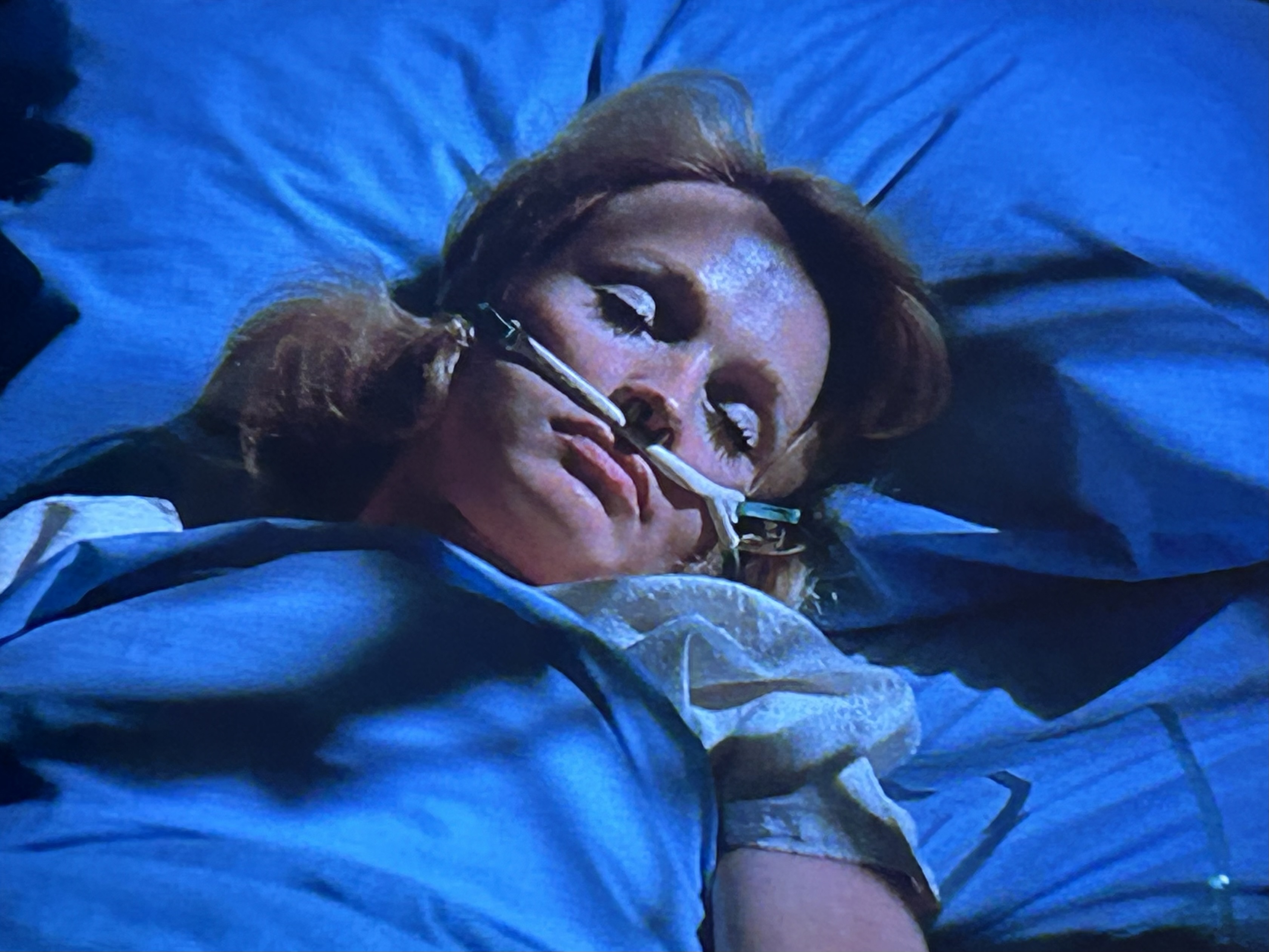
Any gay person who grew up with a overbearingly possessive mother knows the torture of having your every move dictated and the lack of freedom such attentions often bring with them. Such individuals may find much to relate to in the character of Barbara from the Lucy Comes to Stay segment of Asylum, the classic Amicus horror anthology film.

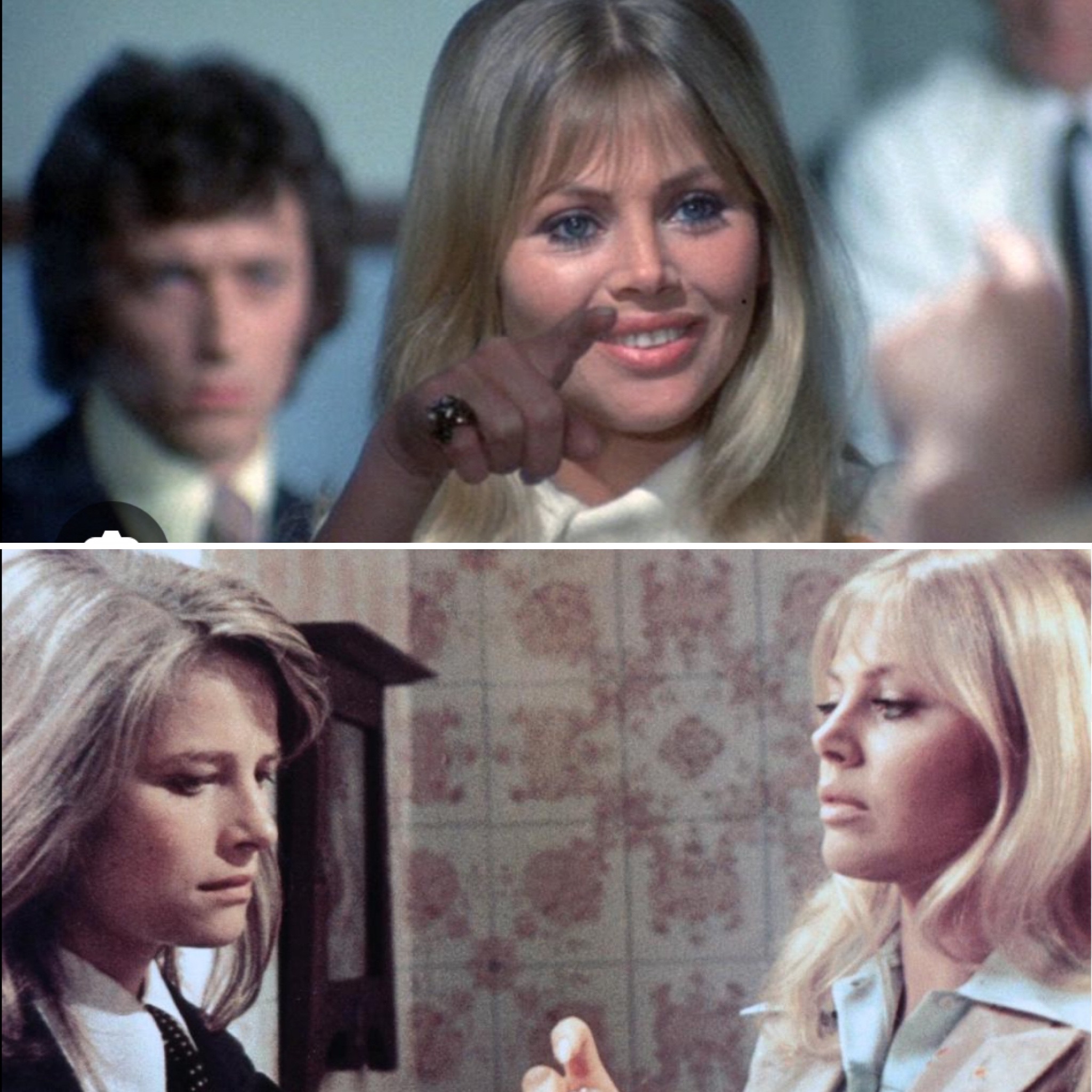
Recently released from a mental institution, Barbara (Charlotte Rampling) is immediately facing a different prison upon returning to her family home. Her brother George (James Villiers) has hired a softspoken yet dominating nurse (Megs Jenkins) to take care of her. Thus, she is forced into bed and given a sedative before she even has a chance to reacquaint herself with her ancestral surroundings. In a few moments, it is apparent to the audience that this is how she is going to spend most of her future days – with no sense of self-control or true freedom.

Rampling so expertly conveys the panic-feeling of her character’s entrapment that it is no real surprise when Lucy (Britt Ekland), Barbara’s seductively blonde alter-ego, appears to assist her. Playing her role with an almost gleefully sly sense of humor, Ekland’s Lucy has soon disposed of both of Barbara’s antagonists, momentarily freeing her to live fully and without apparent restraints. 

Of course, things don’t end exactly as anticipated in the quick segment, with Barbara eventually ending up in the titular establishment again. 

This short scenario ultimately encapsulates, though, why genre film is so important. It allows us, as viewers, to, voyeuristically, watch someone act out against the fictional representations of things that have harmed and/or subdued us.

This riskless revenge, in turn, ties us emotionally to the performers and films that allow us this psychological escape – proving, as always, that art of all forms is truly worth its weight in metaphoric gold.

Until the next time, SWEET love and pink GRUE, Big Gay Horror Fan!
http://www.facebook.com/biggayhorrorfan

Review: it’s been ten years…

Published April 3, 2025 by biggayhorrorfan

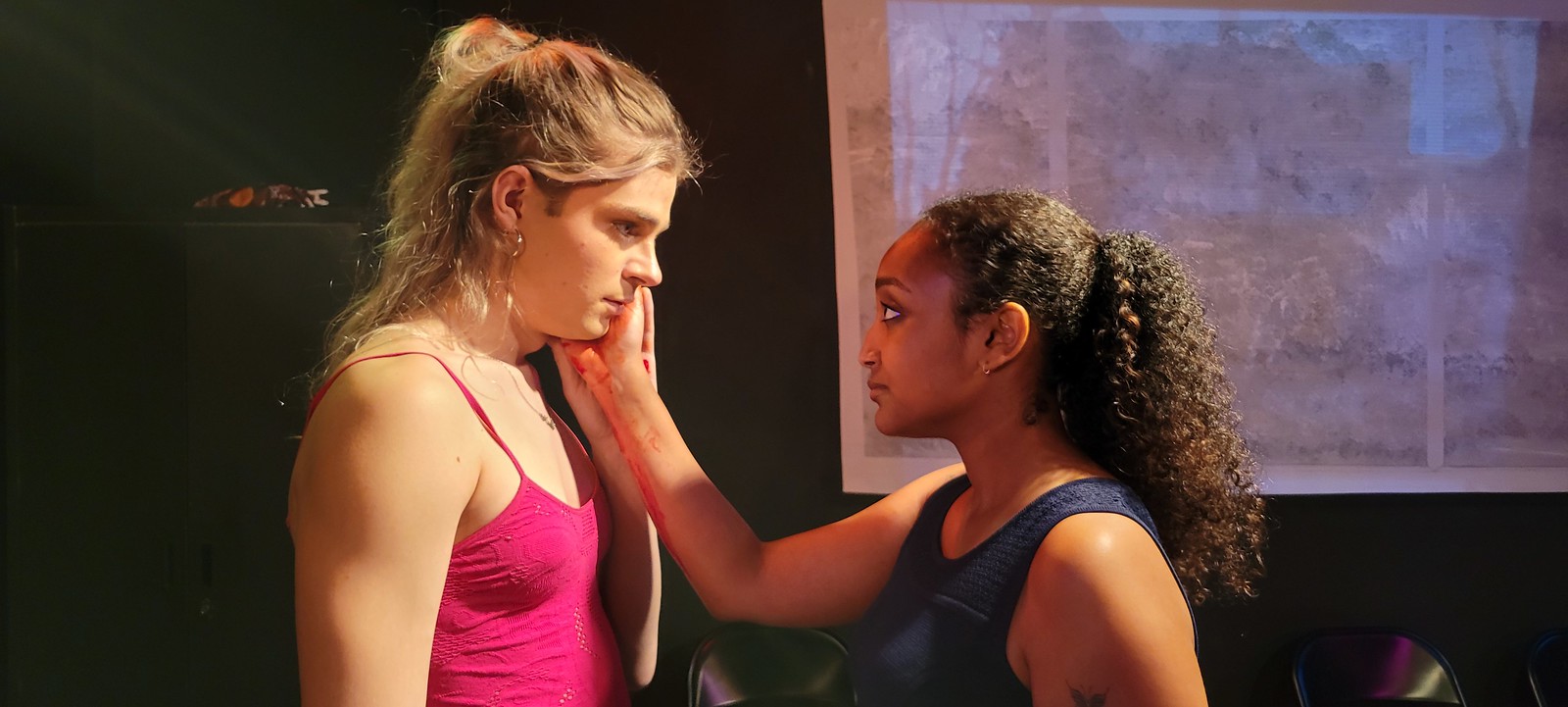
Move over, Regina George! It’s now Alexis Queen’s Betsy that may just be the most manipulative ex-schoolgirl to ever breathe, creatively. 

Indeed, this former cheerleader, one of the main characters in Cesario Tirado-Ortiz’s it’s been ten years since everyone died. a play about final girls is not only seductive, often destroying the hearts of her fellow survivors, but she just might be hiding one of the juiciest secrets to ever hit the stages, as well. 

To be specific, the stage in question here is the Open Space Arts in Chicago, where Ortiz’s deeply psychological, yet truly fun horror piece is running until April 6th. As directed by Teri Talo, Queen imbues this love letter to our magnificent heroines of terror with an edgy sweetness that always makes you wonder just exactly what Betsy is truly hiding.

With the show’s major plot points taking place at a deserted psychological retreat in the woods, – nothing bad is going to happen there, right?!? – Queen is, unsurprisingly, joined by a strong group of castmates – Julia Toney. Noah Hinton and Alex Marusich. Nicely, the majority of Ortiz’s remaining characters are nonbinary and transgender, giving the show a very DIY, LGBTQ+ energy. 

Naturally, our favored genre can only benefit from this type of exciting inclusivity and one hopes that there is more to come from Ortiz and their ilk.

For those living in or visiting the Midwest, be sure to check out https://openspacearts.org/ to find out more about this love letter to slashers and the powerful, sometimes deeply damaged women who make them so relatable.

Until the next time, SWEET love and pink GRUE, Big Gay Horror Fan!
http://www.facebook.com/biggayhorrorfan

Troll Terror 101: Godsend

Published March 22, 2025 by biggayhorrorfan

Somewhere in my media strewn apartment, there is a DVD of Raging Bull. I’ve had it for years, with every intention to watch it, but… 

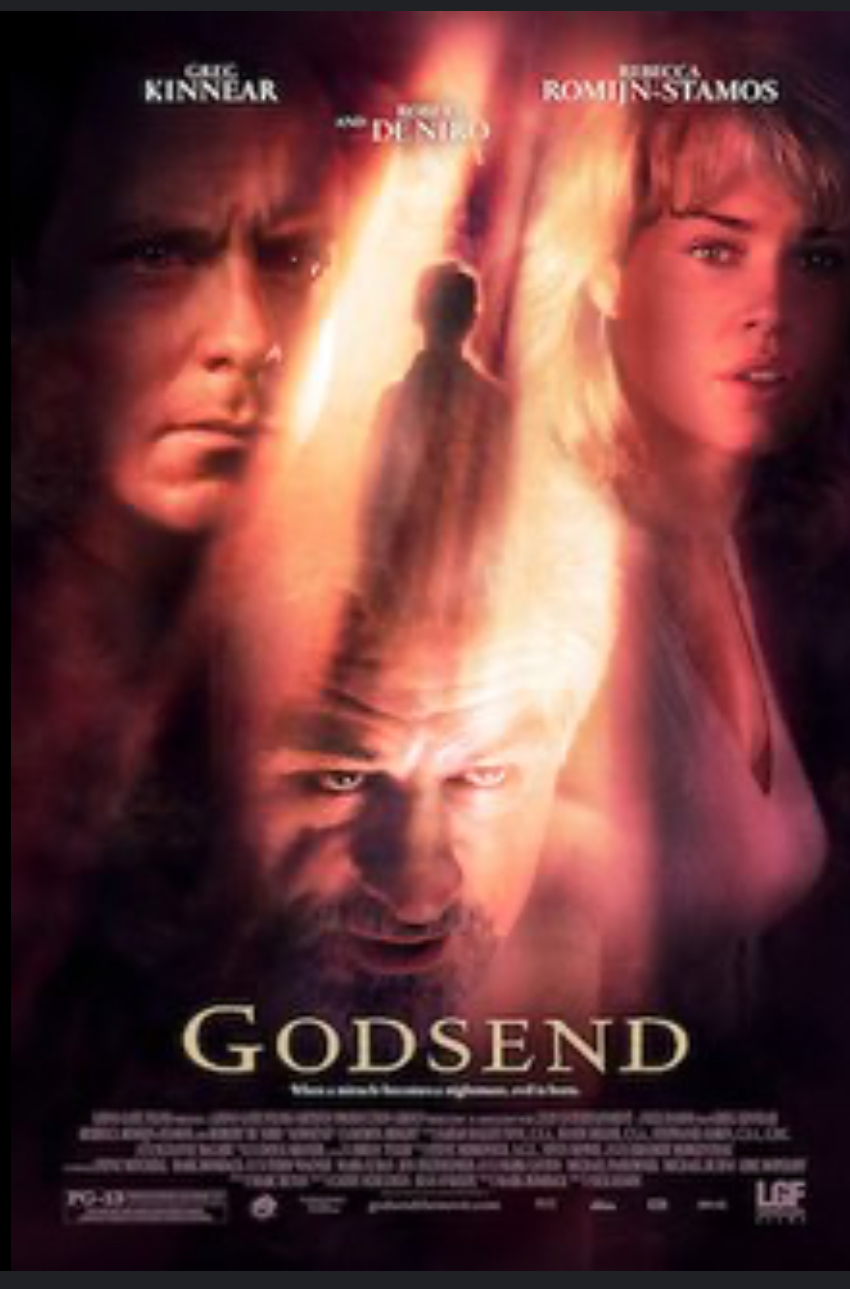
Of course, you can bet I if stumble upon my copy of 2004’s Godsend, featuring Robert De Niro’s other greatly acclaimed modern performance (lol!), all bets are off. That sucker is going in the player!

Before you judge me, though, let’s consider something. At the beginning of the 21st Century, after years of often stellar projects, De Niro seemingly made a purposeful creative decision to begin branching out into his (highly enjoyable) Troll Terror years. He did this via taking roles in projects like (the above mentioned) Godsend, Hide and Seek (2005) and Red Lights (2012). 

Naturally, he was no stranger to the genre, having made appearances in the noir-ishly violent Cape Fear (1991), Kenneth Branagh’s pompous, sweat-tastic take on Frankenstein (1994) and the psycho thriller The Fan (1996). But it was with the poorly received Godsend that I think many critics and fans began to question his choices a bit.

A Mary Shelley-style Bad Seed knock-off, this film found De Niro in (spoiler alert) mad scientist zone. Playing genetics expert Richard Wells, he initially reads as kindly and benevolent. But things take a turn after he helpfully clones the dead child of Paul (Greg Kinnear) and Jessie Duncan (Rebecca Romijn). Upon entering his grade school years, Adam (Cameron Bright) starts to exhibit severe personality disorders while also beginning to act out with deadly intent. After some investigating, the Duncan’s discover that Wells has also imbued their child with DNA from his own psychotic, deceased offspring.

Bleakly impossible, the project wound up with a 3% Rotten Tomatoes score. But Bright, who visited similar territory in the bizarre arthouse adventure Birth, is actually truly effective as the psychologically twisted, less than originally named Adam. De Niro also subtly portrays the deep shift in Wells, bringing a chilling honesty to the scenes where his evil plan is revealed. 

The fact that Kinnear, who was nominated for an Oscar, and De Niro, an honoree with multiple acting statuettes, both found this project worthy also speaks to its effectiveness. Wouldn’t any parent do anything they could to resurrect their suddenly departed offspring? A parent himself, De Niro surely responded to that aspect of the script, making this good kid-gone bad enterprise a repeat watch for me…and, hopefully, plenty of others.

Until the next time…SWEET love and pink GRUE, Big Gay Horror Fan!
http://www.facebook.com/biggayhorrorfan

Hopelessly Devoted To: Gwen Verdon

Published March 9, 2025 by biggayhorrorfan

One-of-a-kind Broadway diva Gwen Verdon’s work was, primarily, centered around her graceful onstage antics. Thankfully for devoted fans everywhere, she occasionally engaged in performances of the celluloid variety as well.

Most importantly, genre-wise, she gave a sexy yet sorrowful performance in 1973’s Deadly Visitor, part of ABC’s very popular The Wide World of Mystery film series. Based on a story by Fitz James O’Brien, a 19th Century fantasy author from Ireland, this particular episode focused on a young writer named Jamie (Perry King) who discovers that his room at a boarding house is haunted by a mysterious presence.

As Mrs. Moffat, the landlady of the specter ridden establishment, Verdon smartly uses her considerable training to sensitively illustrate the monologues she delivers to King’s Jamie. Widowed and lonely, she seduces the lad with a heartfelt need. Of course, when the driven & curious Jamie manages to capture and begins to experiment on the invisible entity, her character’s hysteria slowly builds. Like many a frightened heroine before her, Verdon excels in these moments of increasingly nervous activity, as well.

Interestingly, this teleplay was produced by Jacqueline Babbin, an entertainment juggernaut who gained fame for her work on All My Children. She is joined, behind the scenes, by another powerful woman, Lela Swift, who directs. Swift, who made a name for herself as one of the top directors of the original version of Dark Shadows, surely knows the atmosphere needed to make this story successful and several of the scenes here are truly chilling. In particular, Swift should be commended for the visceral moments where the audience can actually see the ropes, which are wrapped around the titular invisible creature, move up and down as it breathes.

Of course, fans of musicals probably aren’t too surprised by Verdon’s success here. As Lola in 1958’s Damn Yankees, she is the slippery incarnation of lustful evil. There, as the devil’s favored assistant, she tries to lead a troubled baseball player to the dark side forever.

Continuing this trend in the ’80s, but at a slight angle, she played a number of attention-stealing, nearly evil mothers in episodes of such shows as Fame and Hotel.

Of course, even though the theatrical lights dimmed, deeply, with her death at the age of 75 in 2000, she lives on in her excellent work, happily viewable with the simplest (yet incredibly effective) google search.

Until the next time, SWEET love and pink GRUE, Big Gay Horror Fan!

http://www.facebook.com/biggayhorrorfan

Hepburn’s Flame

Published January 11, 2025 by biggayhorrorfan

Nervous, against the grain types were often Katharine Hepburn’s specialty. Unsurprisingly, the fluttery traits of the quirky spinsters she played have also found emotional root with the awkward titular characters in May, Let’s Scare Jessica to Death, Rosemary’s Baby and a host of other femme focused terror fests.

Chronic terror viewers also know that secrets and murderous deeds often beat at the heart of many a gothic vixen. These attributes are something at least one of Hepburn’s characters was very familiar with, as well.

Working alongside frequent collaborators like director George Cukor and actor Spencer Tracy, Hepburn brought the high toned Christine Forrest to life in 1942’s Keeper of the Flame. As the widow of a revered public servant, Forrest presents a shifty figure. Trying hard not to detonate the image of her revered politician husband, Forrest keeps to the shadows, praying to remain illusive as possible after his sudden death. But the attention of Tracy’s Steven O’ Malley, a skilled reporter, endangers this.

Once O’Malley discovers that the calm diplomat had turned into a megalomaniac racist with thoughts of world domination – sound familiar, anyone?!? – he also soon realizes that Christine might have cottoned to this radical switch over, as well. Even more importantly, one very storm swept night, she might have decided to do something very definitive about it. A washed-out bridge is always very convenient for an accidental death, right?!?

Although, filmed lushly and with a sense of overheated (occasionally damp…. see above) drama by Cukor, the production of this all-star vehicle was apparently very troubled. The script was constantly rewritten – with Hepburn, who was devoted to Tracy, even demanding that the traits of her character be strengthened while his be weakened, as was apparently true to the source material the screenplay was based on. Executives and reviewers alike were also dismayed at the bad light the story brought to American officials and their often-questionable policies. 

The fact that her character partook in a form of vigilantism also, seemingly due to the ever-present Hayes Code, found Hepburn’s counterpart in hot fire in the project’s final moments. This jarring sense of patriarchal morality, thankfully, is something we no longer have to forcibly experience as our celluloid femme fatales can often sin without death reaching out its hands for their proudly upright necks. 

But, on second thought, (check Rosemary) is a devil baby clamping on their nips really all that much better?!?

Until the next time, SWEET love and pink GRUE, Big Gay Horror Fan!

www,facebook.com/biggayhorrorfan

The Last of Connie

Published October 19, 2024 by biggayhorrorfan

Leave it to Jada (Elia Cantu). She finally got a couple of clues and realized it might be uber-perky Connie (Julie Dove) that was behind all the disappearances and deaths that had been happening in Salem all summer long. Of course, for drama’s sake, Days of our Lives‘ finest detective was always a step or two behind everyone’s favorite, truly demented personal assistant. 

As a capper to her previous crimes, which included murdering Bobby (Blake Berris) and stabbing Rafe (Galen Gering), Connie deposited Melinda (Tina Huang), her long held hostage, in the lower-level vaults of the DiMera Mansion. After confronting Gabi (Cherie Jimenez), her mortal enemy, in that estate’s ostentatious living room, she added her to the cobweb strewn larder. Ever the amateur explosives enthusiast, she then tried to blow both of her captives up with a homemade bomb. 

It was then onto the Brady Pub to eliminate Ava (Tamara Braun). With that bloodthirsty deed ultimately interrupted by the heroic Stefan (Brandon Barash), the demented damsel was finally intercepted by (the now exhausted) Jada and soon sent packing to the luxuriously padded walls of Bay View. 

Overall, a fun, months-long jaunt, accentuated by Dove’s compelling eccentricity, this story’s long-lasting effects seem like they will be centered on the romantic contingent. Gabi now appears to be drawn to EJ (Dan Feuerriegel), the former business rival who saved her from the blast’s deadly effects. This puts Stefan, Gabi’s formerly ardent husband, into the orbit of Ava, the woman he protected and, much to Gabi’s chagrin, previously bedded.

It seems that Connie, whose truest aim was to permanently upend the lives of Gabi and Stefan, achieved her heart torn victory, after all.

Until the next time, SWEET love and pink GRUE, Big Gay Horror Fan!

http://www.facebook.com/biggayhorrorfan

Queer Horror: The Slumber Party Massacre (1982)

Published October 5, 2024 by biggayhorrorfan

After a 9-year publishing odyssey, Queer Horror: A Film Guide is finally a reality. For a variety of reasons, not all of my pieces made the final cut. I will share some of those unpublished essays here, from time to time. A link to purchase the book is featured, below, as well.

The Slumber Party Massacre (1982)

Writer: Rita Mae Browne, Amy Holden Jones (uncredited)

Director: Amy Holden Jones

Cast: Michelle Michaels, Robin Stille, Michael Villella, Debra De Liso, Andre Honore, Joseph Alan Johnson, Pamela Roylance, Brinke Stevens, Pamela Canzano

Beginning life as a script entitled Don’t Open the Door, director Jones heavily reconfigured writer Browne’s original work while still retaining that legendary lesbian author’s humorous, feministic intent here.

The plot, unsurprisingly, is typical ‘80s slasher fare. A notorious killer (Villella) escapes from the psycho ward, descending upon a group of momentarily parentless teens who are imbibing beer and pot while indulging in sexual antics. Yielding his drill like a phallus, the killer makes his way through the hard-partying population until the final act when the very pretty, very unpopular girl next door (Stille) puts a decisive end to his days of murderous marauding.

Low budget even by typical grindhouse standards, this film ingratiates itself by smartly emphasizing the real-life fear of losing one’s virginity with almost every death sequence and by broadening the perspectives of its feminine protagonists. Led by the subtly assured De Liso as Kim, the female teens here are more knowledgeable about sports stats than their male counterparts and gender stereotypes are subverted with all of the film’s maintenance support staff being played, nonchalantly, by women, as well.

Despite Browne’s involvement, the Sapphic action is ultimately understated here. Reversing expectations once again, the girls’ kindly coach (Roylance) is decidedly soft spoken. Only Canzano in her short scene as a carpenter gives off a decidedly gay vibe with her fun, efficient characterization.