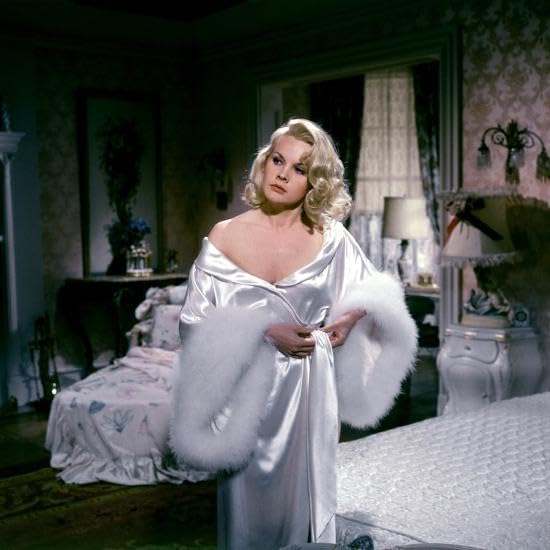
While she didn’t necessarily invent seductive poutiness, Carroll Baker definitely embraced its pertinent esthetics with unrivalled energy. Becoming a household name as the titular Baby Doll, in the 1956 film based upon Tennessee Williams’ short play Twenty-Seven Wagons Full of Cotton, her character salaciously drove the mature men around her insane with lust. She continued that trend with deliciously delivered roles in such over-the-top soap operas as The Carpetbaggers and Harlow, the very fictionalized take on the very platinum Jean Harlow’s life.
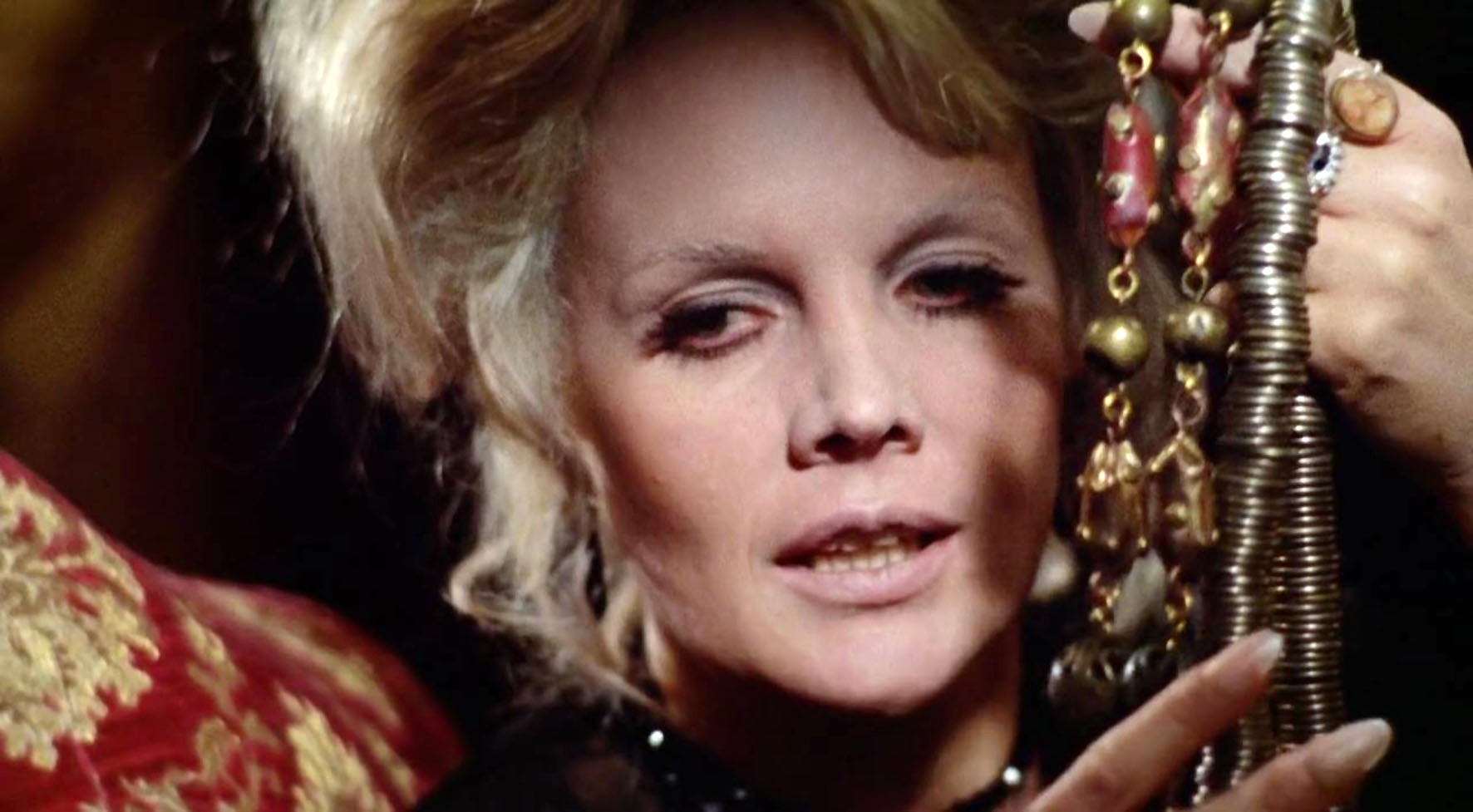
But in the ’60s and ’70s, weary of the unscrupulous mechanics of Hollywood, Baker took her unbridled essence afar, applying it with flair to a fair number of Euro-exploitation flicks. While her roles often alternated between victimhood and criminal pathology within these sticky adventures, her most defined feat of villainy in that era had to be in 1973’s Baba Yaga. There, as the witchy Yaga, she sets about dominating Sally Bowles-like photographer Valentina (Isabelle De Funes) with Sapphic intensity. Causing continual mishap and corporal misadventure in Valentina’s life, Yaga is determined to possess her at all costs.
Initially inheriting the role from previously cast actress Anne Heywood, best known for her work in the compellingly lavender The Fox, Baker ultimately makes Yaga her own unique enterprise. Only 42 years old at the time, the glamourous Baker even let herself be presented in an aging, crone-like state, emphasizing the wispily eternal nature of Yaga’s mystic evilness.
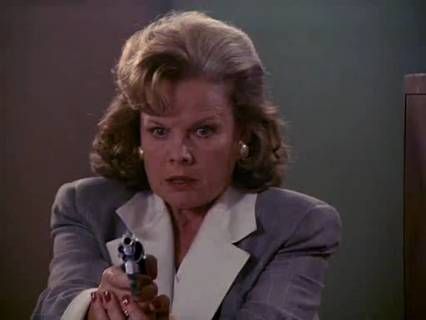
On the other side of the performance spectrum, there is nothing supernatural about the character of Eleanor Crisp. This flinty-eyed villainess, as enacted with calm precision by Baker in 1990’s Kindergarten Cop, is as vicious as they come – solely due to her skewed sense of human nature – or complete lack thereof! With a propensity towards murder, whether via induced drug overdose or vehicular homicide, this is indeed one of the veteran actress’ most chilling performances. Eleanor’s evil radiates off the screen, providing nice balance to the film’s comedic essence and proving what a skilled performer Baker is. She accomplishes much here, without even seeming to bat an eye with effort.
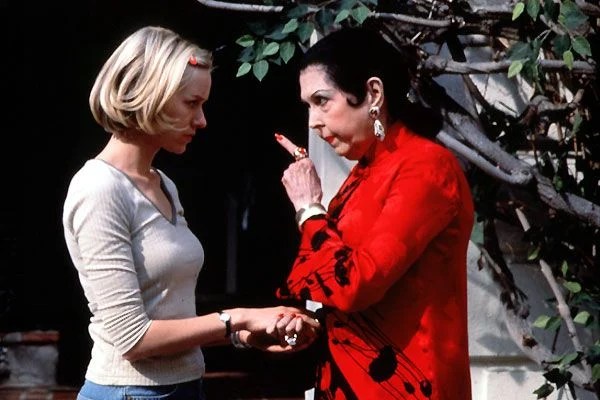
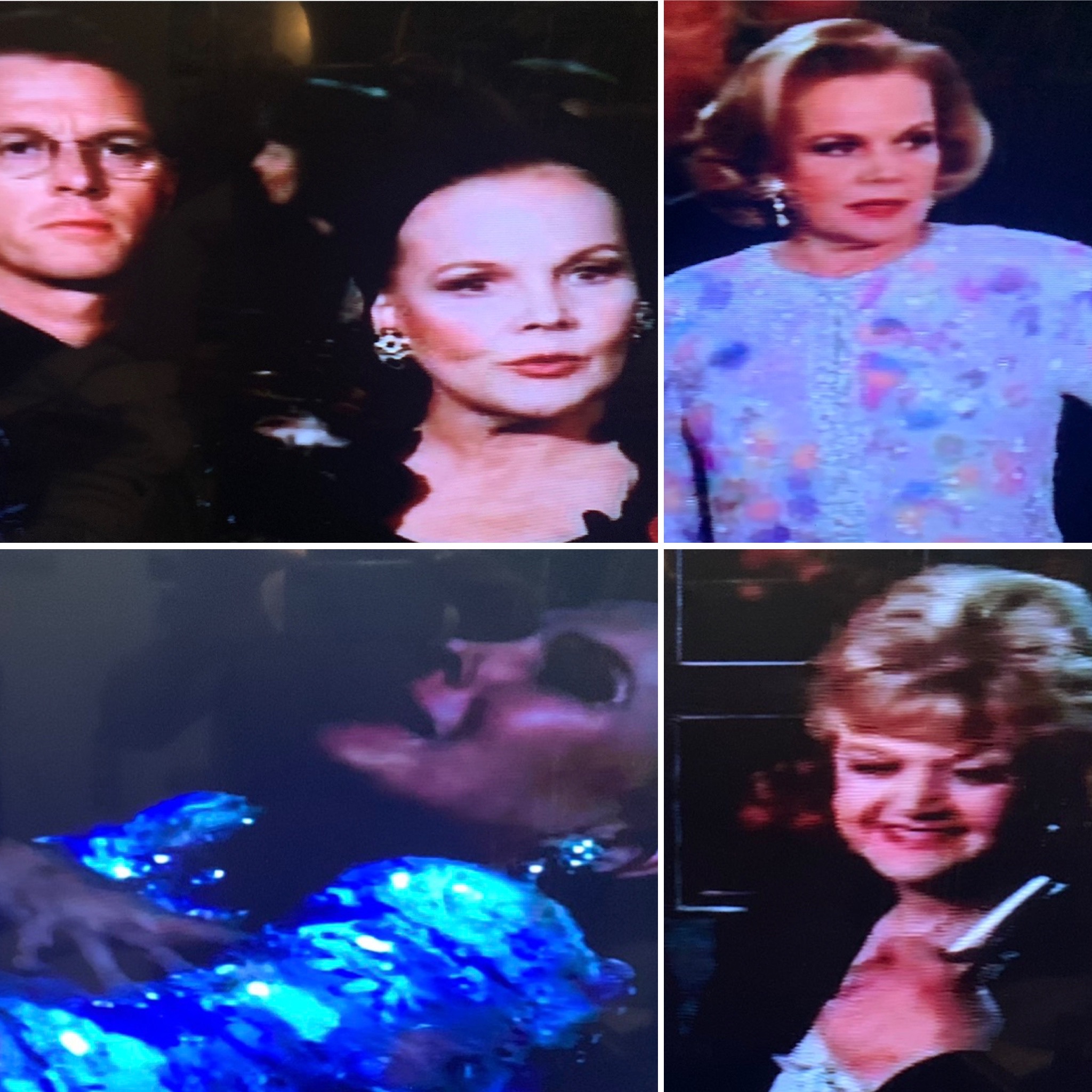
Nicely, three years later she returned to grand guignol territory as the delightfully named Sibella Stone on the 9th season finale of Murder, She Wrote. As flamboyant as Eleanor was stern, Baker still plays this romance novelist with a keen subtlety, playing well off veteran performer William Katt as Stone’s younger husband and the unstoppable Angela Lansbury as the mystery solving Jessica Fletcher. Creatively, Baker treads a thin line here. After a near drowning incident, Stone seems like the caper’s perfectly innocent victim, but Baker occasionally adds tones of gothic uncertainty to the mix, making for both compelling and very fun viewing.
Quick Pick Flick:
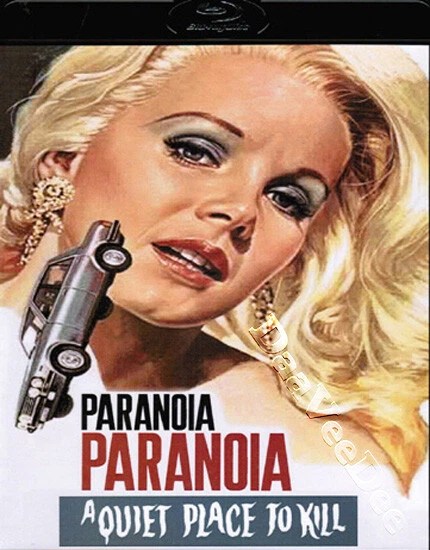
Baker often worked with cult film director Umberto Lenzi during her prime giallo years. While each project has particular moments, their most enjoyable co-creation just might be A Quiet Place to Kill (AKA Paranoia). There, playing a duplicitous race car driver, she navigates windy country terrain, trendy discotheques and brightly colored boudoirs in a tale of deception and death. The plot twists also keep coming here until the very end, resulting in a madcap, sexually charged bit of exploitation celluloid.