William Castle

All posts tagged William Castle

Hopelessly Devoted To: Rosemary DeCamp

Published September 7, 2025 by biggayhorrorfan

Whether represented by the vigilant Diane of Poltergeist or the psychotically murderous Mrs. Voorhees of Friday the 13th, the character of the mother has been intrinsically important to the horror film. Interestingly, years before these films hit the cinema, producer William Castle followed this dueling outline of matriarchal personality types in his projects, as well.

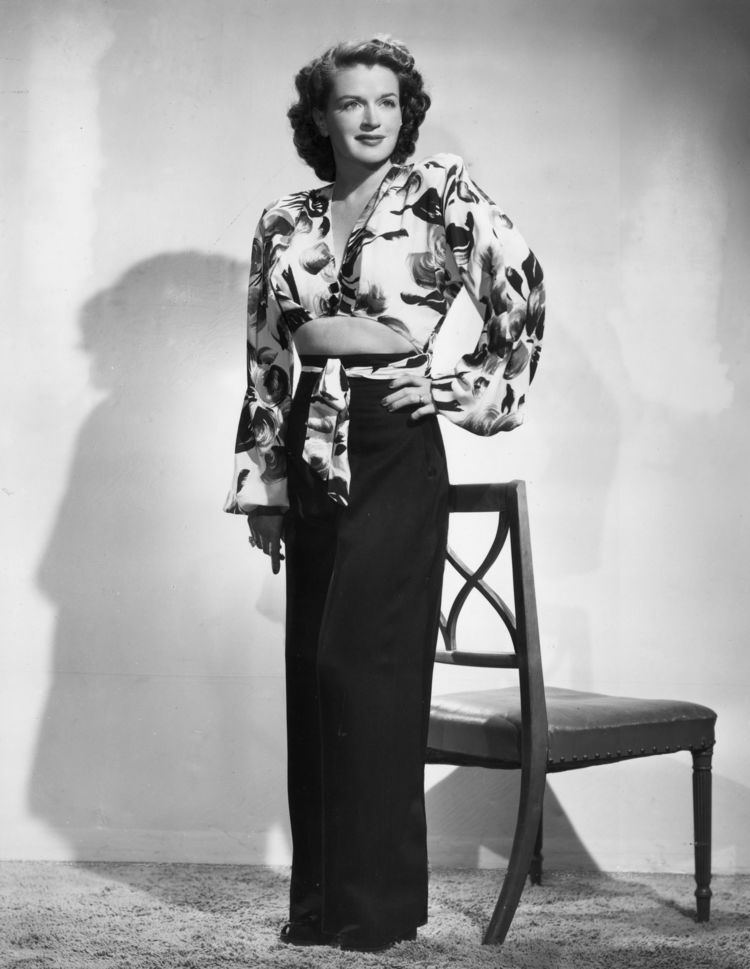
Famously, Joan Crawford’s Lucy Harbin in Strait-Jacket represented the more unhinged maternal aspect. Rosemary DeCamp, meanwhile, perfected the traditional caretaker as Hilda Zorba in 1960’s 13 Ghosts. Of course, by the time her stint with Castle came around, Crawford had already helped define the Grand Dame Guignol genre with her work in the eternally classic Whatever Happened to Baby Jane? But DeCamp, who arguably became best known for playing Marlo Thomas’ mother in That Girl, had also appeared in Eyes in the Night, a moody noir-detective story that was described as being “startling as a scream!” at the beginning of her career.

Further espousing terror pyrotechnics, DeCamp went on to roles in The Painted Mirror, an episode of Night Gallery (featuring Zsa Zsa Gabor), and the genre specific comedy Saturday, the 14th. The television episode, in particular, might resonate with older movie fans as DeCamp outwits an evil Gabor there.

Nicely, Tigers In My Lap, DeCamp’s truly enjoyable memoir, shares on set highlights of many of her projects. To that end, her reminiscent details about working with Castle aren’t plentiful, but they are apt. She notes that her role didn’t involve a lot of acting chops and that she even had trouble discerning the celluloid ghosts onscreen at the film’s premiere. Still, she rejoices a bit in the producer’s showmanship, claiming that she had the most stills of that movie out of all her projects-all due to Castle’s knack for publicity.

Thus, while DeCamp isn’t necessarily eulogized as a Queen of Scream, her connections to the genre are significant enough for fans of all ages to embrace her and her work.


Fun Fact: DeCamp’s contributions to movie musicals are also of note. While she blazes with snappy power as Kathryn Grayson’s bohemian aunt in So This is Love, a biography of opera singer Grace Moore, On Moonlight Bay and By the Light of the Silvery Moon, both starring Doris Day, are nostalgia buff’s favorites by far. Illustrating the significance of these projects, Day even lovingly contributed the forward to DeCamp’s book.


Until the next time, SWEET love and pink GRUE, Big Gay Horror Fan!

http://www.facebook.com/biggayhorrorfan

Shark Bait Retro Village: The Sex Symbol

Published October 20, 2023 by biggayhorrorfan

Let’s get this out of the way, right off the bat – it is super creepy watching legendary producer William Castle, always a naturally congenial presence onscreen, play Jack P. Harper, a sleazy Golden Age movie mogul in the 1974 television film The Sex Symbol. A fictionalized, ridiculously exploitive look at the life and times of Marilyn Monroe, this greasy bio-pic stars silvery Connie Stevens as the luscious, deeply troubled Kelly Williams. Granted, there are several evocatively disturbing components here. For instance, the screenwriters seem obsessed with the rumor that Monroe veered towards the asexual side in the bedroom, remitting countless scenes of a barely clothed Stevens bemoaning her lack of interest in the carnal as her partners smoke, hazily, in rumpled bedrooms. But Castle’s supporting role, as the executive who helps create Williams’ translucent aura, hits the hardest when he rapes the titular character in a fur-stained boardroom. We’re a long way from the innocent charms of the original 13 Ghosts here, folks!

Almost as a counterbalancing routine, we get a bit of Sapphic intrigue occurring throughout this perfumed reimagining, as well. To that matter, the exquisite Madlyn Rhue is on hand as Kelly’s trusted secretary, Joy Hudson. Hudson, an obvious stand-in for Monroe’s lesbian acting coach Natasha Lytess, spends her screen time glowering at anyone who dares disturb Williams’ autonomy on the celluloid baby-voiced diva market. Of course, whether she is drying her charge’s never ending tears or, lasciviously, giving her an oily rubdown, Rhue excels with a hardened demeanor and sultry essence of control.

Nicely, even though the premise, a flashback laden journey as Williams teeters on the brink of alcoholic immobilization, is an often exhausting one, Stevens is surprisingly good in the project, too. She offers up a raw and truthfully connected pathway to her character, showing both heart and watery persistence in equal measures. 

To balance out Steven’s pert femininity, perennial bad guy and 70s horror icon William Smith makes the scene as (the Joe DiMaggio-esque) Butch. Although, the most wickedly inspired casting here might belong to the laidback Don Murray, as a randy politician on the rise, and the overbearingly camp Shelley Winters, essaying a outwardly flowery yet intrinsically vengeful gossip columnist. As many celluloid fans are aware, Murray co-starred with Monroe in Bus Stop while Winters was her roommate, once upon a glistening Hollywood memory, when both women were young starlets. 


Horror Hall of Fame:

While Stevens has her share of cobweb strewn credits – Two on a Guillotine (a personal favorite, btw) & Tales from the Darkside, for instance, it is Winters who is the true horror maven here. Her credits include Who Slew Auntie Roo?, What’s the Matter with Helen?, Tentacles, Witchfire, The Tenant and The Visitor. Check ’em out!


Until the next time, SWEET love and pink GRUE, Big Gay Horror Fan!

http://www.facebook.com/biggayhorrorfan

Review: Who Killed Joan Crawford?

Published November 4, 2019 by biggayhorrorfan

whokilledjoan 2.jpg

William Castle fiends take note. If Strait-Jacket era Joan Crawford is your thing then you better rush your cult film worshipping selves to the Athenaeum Theatre for the final performances of Glitterati Production’s beyond fun Who Killed Joan Crawford?

Taking place on Tony Awards night in 1993, this engaging and campy thriller revolves around the backstabbing antics of a group of longtime friends. Of course, the fact that all the players are dressed in various forms of Crawford drag does eventually limit their mobility as various weapons are brought out for purposes of bloody dispatching. There is also the small problem of their mysteriously missing host.

Directing Michael Leeds’ cattily inventive script with flair, director John Nasca highlights the material’s expected, much loved murder-mystery tropes with zeal. He and Lana Whittington, who designed the show’s more physical interactions, also skillfully help denote the fact that this ensemble of characters are not experienced drag performers, but grown men indulging a friend’s grand birthday wish.

Importantly, those various versions of Joan, focusing on everything from her early treks into stardom to her latter day romps in psycho biddy territory (note the Straight-Jacket reference above), are delivered with exquisite, recognizable skill by Nasca. He is grandly assisted by Robert Hilliard, who puts a definite, celluloid stamp on the wide variety of wigs used.

Who Killed Joan Crawford 1

Bringing this brisk 75 minute romp fully into the pleasure zone, though, is it’s very agreeable cast. Compromised of newer talent and seasoned veterans of Chicago’s professional theater scene, the ensemble joyfully gives their characters a sense of specificity as a whole. It’s truly a nice balance of personalities, with John Cardone and Patrick Rybarczyk, in particular, giving an arch urgency and playful verve to their calculating, frequently divisive interactions. Nicely, Michael Hampton, as the seemingly loving and emotionally convincing Stewart Fry, truly commands attention here, as well. His character is perhaps the most well rounded of the lot, and he makes the most of every occasionally contrary, frequently whimsical moment.

More information on the show, which runs in Chicago until November 10th, is available at https://www.facebook.com/events/2804610532934028/.

Until the next time, SWEET love and pink GRUE, Big Gay Horror Fan!

www.facebook.com/biggayhorrorfan

Music to Make Horror Movies By: Barbara Stanwyck

Published September 8, 2019 by biggayhorrorfan

Barbara The House.jpg

One of the most distinctive and skilled of the golden age performers, Barbara Stanwyck excelled in dramas (Stella Dallas, My Reputation), gritty noir classics (Double Indemnity, The File on Thelma Jordan) and comedy (Ball of Fire, Christmas in Connecticut). Several of the films that she embraced with her throaty presence in the ‘40s and ‘50s, including the tautly melodramatic Two Mrs. Carrolls and the chilling Sorry, Wrong Number, also featured significant elements of the horror canon.

Nicely, she fully embraced the genre in such latter day projects as William Castle’s The Night Walker and ‘70s television films like A Touch of Evil and The House That Would Not Die (above).

As with many silver screen damsels with numerous credits, a percentage of her saucy, hardened characters sang. Occasionally, she was dubbed by more skilled vocalists. But with projects such as the fun and frisky Lady of Burlesque, her own whisky tones were allowed to sell the tune.

https://www.youtube.com/watch?v=Rt9SVJevMgg

Nicely, https://www.barbara-stanwyck.com/, a fan created site, plays eternal homage to this one of a kind icon and golden throat nominee.

Lady of burlesque

Until the next time, SWEET love and pink GRUE, Big Gay Horror Fan!

www.facebook.com/biggayhorrorfan