
Let’s get this out of the way, right off the bat – it is super creepy watching legendary producer William Castle, always a naturally congenial presence onscreen, play Jack P. Harper, a sleazy Golden Age movie mogul in the 1974 television film The Sex Symbol. A fictionalized, ridiculously exploitive look at the life and times of Marilyn Monroe, this greasy bio-pic stars silvery Connie Stevens as the luscious, deeply troubled Kelly Williams. Granted, there are several evocatively disturbing components here. For instance, the screenwriters seem obsessed with the rumor that Monroe veered towards the asexual side in the bedroom, remitting countless scenes of a barely clothed Stevens bemoaning her lack of interest in the carnal as her partners smoke, hazily, in rumpled bedrooms. But Castle’s supporting role, as the executive who helps create Williams’ translucent aura, hits the hardest when he rapes the titular character in a fur-stained boardroom. We’re a long way from the innocent charms of the original 13 Ghosts here, folks!

Almost as a counterbalancing routine, we get a bit of Sapphic intrigue occurring throughout this perfumed reimagining, as well. To that matter, the exquisite Madlyn Rhue is on hand as Kelly’s trusted secretary, Joy Hudson. Hudson, an obvious stand-in for Monroe’s lesbian acting coach Natasha Lytess, spends her screen time glowering at anyone who dares disturb Williams’ autonomy on the celluloid baby-voiced diva market. Of course, whether she is drying her charge’s never ending tears or, lasciviously, giving her an oily rubdown, Rhue excels with a hardened demeanor and sultry essence of control.
Nicely, even though the premise, a flashback laden journey as Williams teeters on the brink of alcoholic immobilization, is an often exhausting one, Stevens is surprisingly good in the project, too. She offers up a raw and truthfully connected pathway to her character, showing both heart and watery persistence in equal measures.

To balance out Steven’s pert femininity, perennial bad guy and 70s horror icon William Smith makes the scene as (the Joe DiMaggio-esque) Butch. Although, the most wickedly inspired casting here might belong to the laidback Don Murray, as a randy politician on the rise, and the overbearingly camp Shelley Winters, essaying a outwardly flowery yet intrinsically vengeful gossip columnist. As many celluloid fans are aware, Murray co-starred with Monroe in Bus Stop while Winters was her roommate, once upon a glistening Hollywood memory, when both women were young starlets.
Horror Hall of Fame:
While Stevens has her share of cobweb strewn credits – Two on a Guillotine (a personal favorite, btw) & Tales from the Darkside, for instance, it is Winters who is the true horror maven here. Her credits include Who Slew Auntie Roo?, What’s the Matter with Helen?, Tentacles, Witchfire, The Tenant and The Visitor. Check ’em out!

Until the next time, SWEET love and pink GRUE, Big Gay Horror Fan!
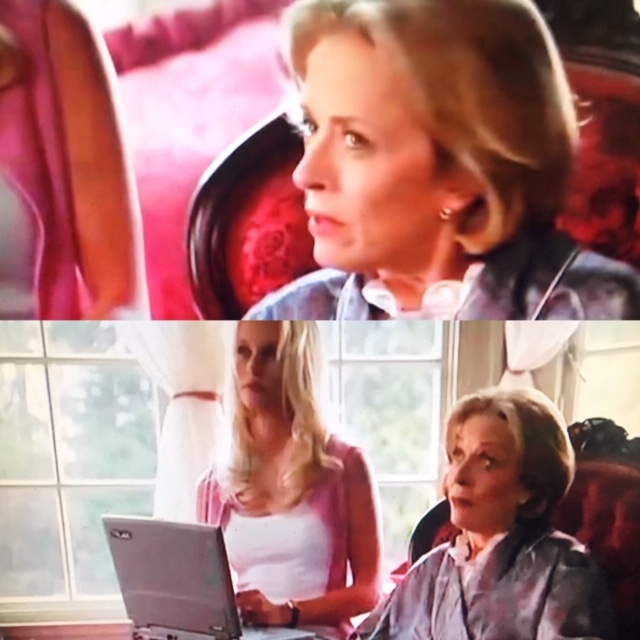

 Moodily directed by Gordon Hessler (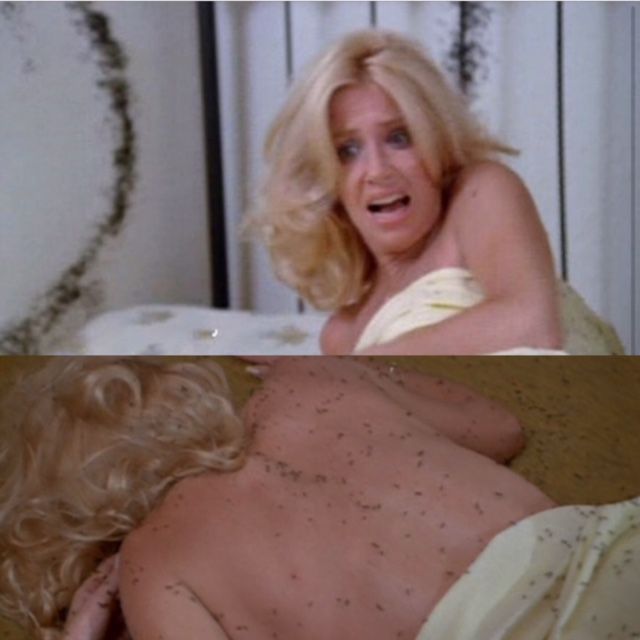


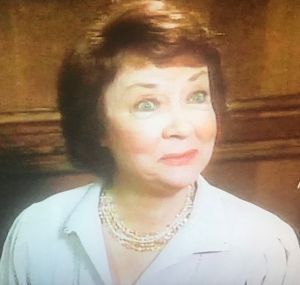 Nicely, clear eyed viewers will also spot noir icon Audrey Totter as a secretary in Locklear’s office. Here, Totter provides some old school Hollywood rational amongst this television film’s ridiculously over-the-top offerings.
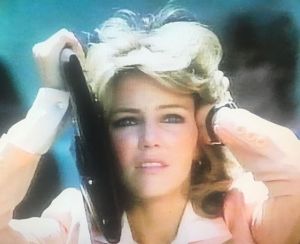 Locklear, of course, made other genre-centric appearances in such projects as the big budget Stephen King adaptation
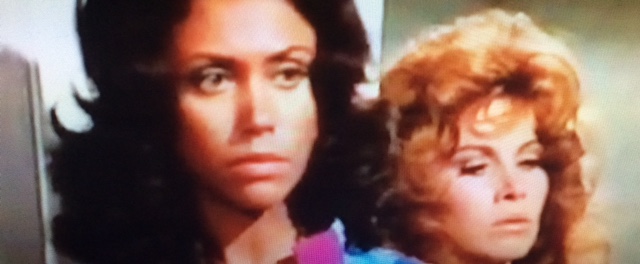

 Gloria’s fellow cohorts, meanwhile, include Lucy (Anjanette Comer), a well-to-do alcoholic, Dorian (Joan Hackett), an insecure animal lover whose fantasies are her ultimate undoing, Mary Grace (Julie Sommars), a tender soul being held emotionally captive by her invalid mother and the intelligent and determined Joy (Denise Nicholas). Unfortunately, in a wildly politically incorrect move, Joy, the sole black woman of the group reveals, in a bizarrely detailed monologue, that she has blown all her educational and career opportunities through some sort of nonchalance and emotional disregard, to settle for the life of a high class prostitute. There is an interesting Tennessee Williams vibe to the exchange and Nicholas fills it with a coat of truthful bitterness and resolve, finding honesty where another may have just filled it with the anger of a minority actress forced to play another lady of the night. Equally strange, yet not as troubling, is an early scene with Mary Grace and her mother. In a weird twist, the mother communicates only through her nurse who determines what she is thinking through glances and then relays their intent to Mary Grace. It’s a strange and unsettling bit that fills this piece with a bit more artiness and presence than your run of the mill made for television affair.


 Big Gay Horror Fan