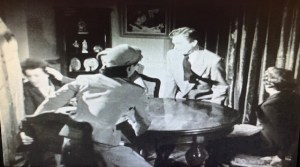
Screen legend Robert Mitchum tussled with such bad asses as Lee Marvin, George Kennedy, Jean Simmons and Jane Russell onscreen throughout his career as Hollywood’s smoothest tough guy. In 1955’s melodramatic medical drama Not As A Stranger this maverick met his match, though, while appearing opposite two of Universal Horror’s shining lights.
Here the incomparable Lon Chaney Jr., who appeared most famously as the original Wolf Man, dominates his tiny bit of screen time opposite Mitchum’s emotionally remote medical student Lucas March. As March’s alcoholic father, Chaney brings his own experience with that insidious disease to the fore, creating a truly sorrowful, emotionally impactful presence. Of course, those who have appreciated Chaney’s latter-day work in such projects as Spider Baby know what an amazing dramatic performer that he was.

Once March graduates, he wanders into the orbit of Mae Clarke’s steely Odell, a nurse who questions his knowledge and authority. A far cry from Frankenstein’s victimized Elizabeth, Clarke resonates with a determined attitude and a sense of unique force. Nicely, her final moments opposite Mitchum do give her a chance to show a tart sympathy, allowing her to create a rounded portrait within the few quick scenes that she is given to perform in.
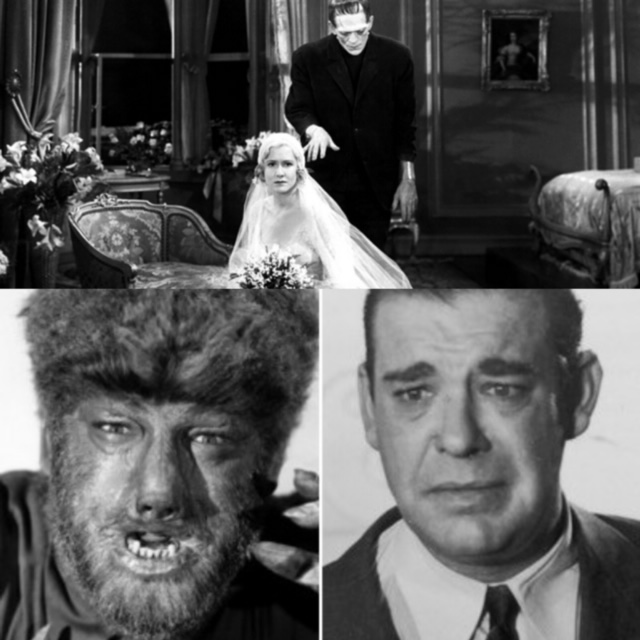
Masters of their craft. Chaney and Clarke deserve recognition for all their celluloid contributions. A quick online search of their credits should lead you into many fascinating cinematic journeys.
Happy hunting and…
Until the next time, SWEET love and pink GRUE, Big Gay Horror Fan!



 Much like


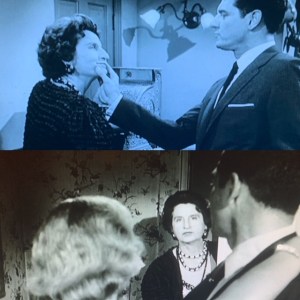



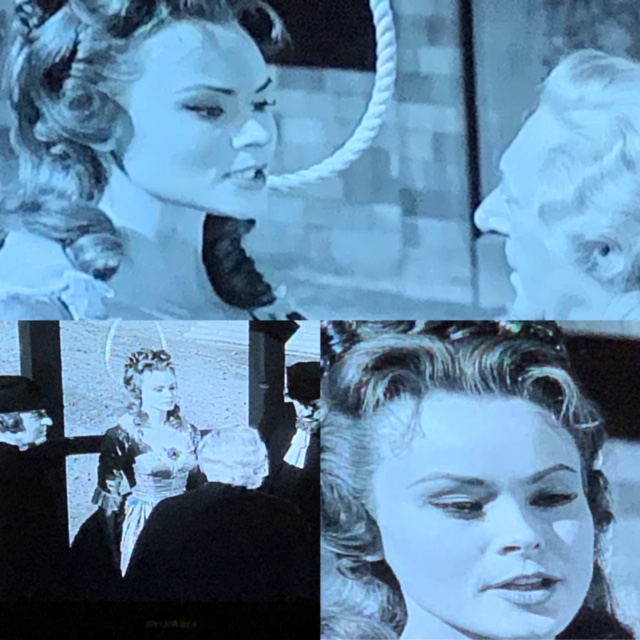
 After a traumatic miscarriage, Jean Wilson (Havoc) begins renting a country cottage, due to the insistent recommendation of her husband (Stephen Dunne), in order to recuperate. But rest is the last thing that occurs for our beleaguered heroine when the house’s former mistress begins to take over her personality. Jean is soon tracking down the dead woman’s husband (James Mason), a famous novelty pianist, and integrating herself into his life. A disastrous séance, moodily filmed by directors Roy Kellino and William Spier, a change in her hair color and bouts of sleepless, incredibly erratic behavior ultimately lead to a moodily gothic yet emotionally abrupt climax here.